
Editorial note: This is an evidence-led buying and fitting guide. Product labels, prices and specifications can change; confirm the exact build and seller terms before purchasing.
Mallet and blade describe broad head shapes, not automatic skill levels. Mallets commonly provide more alignment structure and resistance to twisting, while blades can provide a compact view and different face-awareness. Hosel, toe flow, length, lie, loft, head weight and grip can matter as much as shape.
Shape is only the first layer
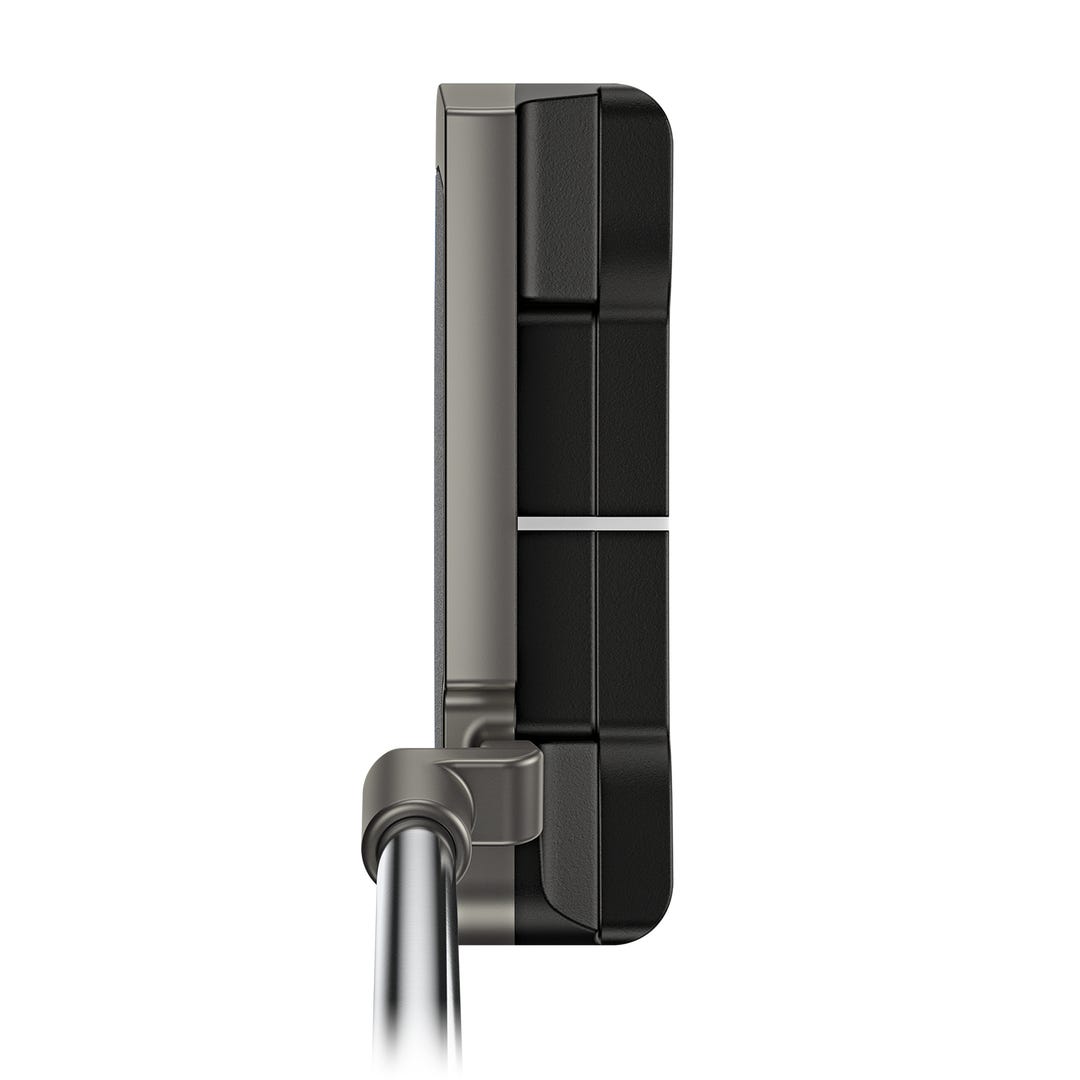
A blade is generally compact from face to back, often with heel-toe weighting. A mallet extends farther behind the face and can move mass away from the center. That geometry can increase stability and create room for long alignment lines, but it does not tell you how the putter hangs, rotates or sits at address.
Two mallets can require different releases because their hosels and center-of-gravity locations differ. Two blades can also provide different toe flow. Begin with what the putter does in your hands rather than the category printed on the shelf.
Six factors to compare
Alignment
Test whether the shape and markings help you aim the face without manipulation. Use a straight six-foot putt and verify alignment with a gate or another objective reference. A long line helps some players; others aim better with a simple top line.
Off-center stability
Intentionally strike slightly toward the heel and toe. Compare how much the ball loses speed and changes direction. A higher-MOI head can reduce the penalty, but impact quality still matters.
Face rotation and hosel
Stroke labels such as straight, slight arc and strong arc are starting points. Match the hosel and balance to the way you deliver the face. Do not force a manufactured arc merely to suit a putter.
Length and lie
If the putter is too long, too short, upright or flat, the eyes and hands may compensate. Check posture, eye position, sole contact and whether the face returns square without steering.
Loft and roll
Delivered loft influences launch and skid. The correct static loft depends on hand position, ball position and green conditions. Look for predictable roll rather than assuming the factory loft is correct.
Pace control
Hit putts from 15, 30 and 45 feet. Measure the distance left after each attempt. A model that wins a short-putt drill but creates inconsistent long-putt speed is not a complete fit.
A useful beginner test
Compare one blade and one mallet at the same length. Hit ten straight six-foot putts through a start-line gate, then ten putts from three longer distances. Track makes, start-line misses and leave distance. Repeat with impact locations marked. The winner should reduce both directional and pace errors.
A repeatable decision process
Define the problem before comparing options. Write down the current specification, the typical miss, the performance result you want and the conditions in which the equipment will be used. Without a baseline, a different feel can be mistaken for an improvement.
Compare one major variable at a time and keep the ball, target and warm-up consistent. Use ordinary swings and retain normal misses in the sample. Record the complete pattern rather than the longest shot or best result. For full-swing clubs, capture carry, peak height, start direction, curvature, strike and dispersion. For putting, record start line, pace and three-putt tendency from several distances. For golf balls, test from the green backward through wedges, irons and driver.
Confirm the exact specification in writing. Model name alone does not identify length, loft, lie, shaft, grip, set makeup, condition or prior alterations. Save photographs, serial information, receipts and fitting sheets. If the outcome is close, repeat the comparison on another day or outdoors before paying for a custom or non-returnable order.
Common mistakes
- Choosing from one label, shape or marketing category.
- Comparing only perfect strikes and deleting normal misses.
- Ignoring total cost, return rights and likely adjustment work.
- Changing several variables simultaneously and guessing which one helped.
- Buying first and planning to make an unsuitable specification fit later.
Final checklist
- Identify the performance problem.
- Record the current specification and baseline.
- Inspect or test under consistent conditions.
- Compare dispersion and carry, not only maximum distance.
- Verify authenticity, condition and seller terms.
- Save the final build specification.
Three putting scenarios
You aim inconsistently but control pace well
Prioritize address appearance and alignment structure. Compare a clean blade line with a mallet that has a longer center line. Have another person or a laser confirm where the face is actually aimed; the option that merely looks comfortable may still point away from the target. Keep length and lie consistent so head shape is the main change.
You aim well but lose speed on mishits
Use impact tape and deliberately contact the heel and toe. Compare start line and leave distance. A stable mallet may reduce the penalty, but a perimeter-weighted blade or mid-mallet can also perform well. Choose from measured loss rather than head size.
You struggle with both short and long putts
Test fit before shape. Incorrect length, lie or loft can compromise setup and roll in any head. Once the build allows a natural posture, compare short start-line performance and long pace control separately. A mixed result may favor the model with the smaller costly miss: fewer three-putts rather than the occasional extra short make.
Simple comparison scorecard
| Test | Record | Priority |
|---|---|---|
| Six-foot gate | Starts through gate / 10 | Face control |
| 30-foot ladder | Average leave distance | Pace |
| Heel/toe strikes | Direction and speed loss | Forgiveness |
| Setup check | Aim, sole and eye comfort | Fit |
Frequently asked questions
Are mallet putters more forgiving?
Many have higher moment of inertia and lose less direction or speed on off-center contact, but construction varies and a well-fit blade can outperform an unsuitable mallet.
Do professional golfers use mallets?
Yes. Head shape is a fitting choice, not a skill ranking. Professionals use blades, mallets and mid-mallets.
Should a straight stroke use a mallet?
Not automatically. Some face-balanced or center-shafted mallets suit lower face rotation, but hosel and balance—not the word mallet—describe the relevant behavior.
Which shape is better for long putts?
The one that produces more repeatable pace. Test lag putts as well as short start-line drills.
Related guides
See our best putters for beginners and club-fitting checklist.
Sources and update policy
PING’s WebFit putter tool uses stroke and visual preferences, while current Scottsdale specifications demonstrate that different mallets are built for different stroke types. Sources and linked product guidance were checked August 17, 2026. We update this guide when fitting systems, condition standards or relevant product categories change.

Leave a Reply