
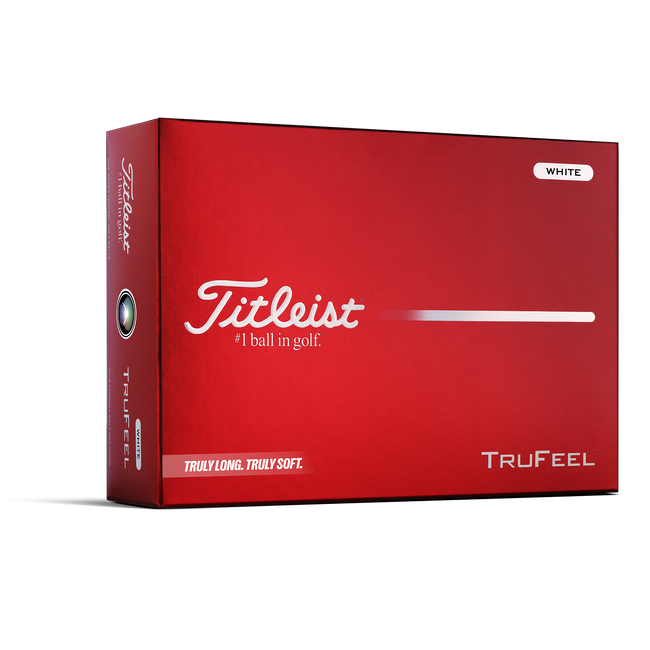
A two-piece golf ball usually combines one large core with a cover, while a three-piece ball adds a mantle layer between the core and cover. The extra layer gives designers another way to separate driver behavior from iron and short-game performance. It does not automatically make a three-piece ball longer, softer or better for every golfer.
Two-piece vs three-piece golf balls at a glance
| Factor | Two-piece ball | Three-piece ball |
|---|---|---|
| Typical construction | Large core plus cover | Core, mantle and cover |
| Design emphasis | Simple speed, durability and value | More tuning options between shot types |
| Driver spin | Often designed to remain manageable | Can also be low, depending on mantle and core |
| Short-game response | Varies; basic ionomer models tend to release more | Can offer more control, especially with urethane cover |
| Price | Usually value to mid-price | Ranges from mid-price to premium |
| Best starting fit | Beginners, frequent ball loss, durability focus | Players comparing performance by club and shot |
What the layers do
The core stores and returns energy during impact. Its size, firmness and material influence speed, feel and spin. The cover contacts the clubface and carries the dimple pattern, so it affects aerodynamics, durability and short-game friction. In a three-piece ball, the mantle sits between them and gives engineers another material and thickness to tune.
Layer count is only architecture. Two balls with three layers can perform very differently because their materials, compression, thicknesses and dimple patterns differ. A modern two-piece model can feel soft; a three-piece model can feel firm. Read construction as one clue rather than a complete specification.
How two-piece balls typically perform
Most two-piece balls use a large resilient core and an ionomer-family cover. The simple construction is efficient to manufacture and often highly durable. Many models target golfers who want dependable ball speed, a stable flight and lower replacement cost.
Because these balls commonly use a firmer, abrasion-resistant cover, they may release farther on short chips than a premium urethane ball. That can be useful for a golfer who prefers bump-and-run shots and learns one predictable rollout pattern. It may be less useful on firm greens when the player wants a low shot to stop quickly.
Two-piece does not mean beginner-only. A skilled golfer may use one for winter rounds, practice, a ball-loss-heavy course or a flight characteristic that fits. Performance should be judged by the result, not the status associated with the construction.
How three-piece balls typically perform
The mantle in a three-piece ball allows more separation between high-speed and low-speed impacts. A designer can target efficient driver performance while using the cover and mantle combination to change iron or wedge response. Three-piece balls include both urethane-covered tour-style products and ionomer-covered models, so the category is broad.
A three-piece urethane ball commonly appeals to golfers seeking greenside check without accepting excessive driver spin. A three-piece ionomer ball may emphasize soft feel or a particular flight at a lower price. Neither cover nor layer count guarantees a launch-monitor outcome.
Distance: which construction is longer?
There is no universal winner. Both constructions can reach conforming performance limits, and real distance depends on ball speed, launch, spin, aerodynamic flight and landing conditions. A ball that spins too much with the driver may lose carry or roll; one that spins too little may launch or descend poorly for that player.
Compare average carry and dispersion across several representative strikes. Do not select from the single longest shot. A ball that is two yards shorter but consistently finds the playable side of the course may be the stronger scoring choice.
Spin and approach control
Construction helps manufacturers manage spin by shot type, but cover material becomes especially important as impact speed falls. On a driver, core and mantle behavior contribute heavily. On a short pitch, the cover’s interaction with grooves and face texture is more visible.
This is why a basic two-piece ionomer ball and a three-piece urethane ball can feel dramatically different around the green. For the separate role of cover material, read our urethane vs ionomer golf-ball guide.
Feel and compression are not the same as layer count
Golfers often expect two-piece balls to feel hard and three-piece balls to feel soft. That shortcut is unreliable. Core compression, cover hardness, mantle properties, cover thickness, temperature and clubhead speed all influence sensation. Sound also changes perceived firmness.
Evaluate feel on putts, chips, partial wedges, irons and the driver. A ball that feels pleasing with the putter may be too soft or indistinct on full shots for one golfer, while another may prefer exactly that response. Our soft vs firm golf balls test explains how to compare feel without letting one shot dominate.
Durability and real cost
A typical ionomer-covered two-piece ball resists scuffs well. Many three-piece urethane balls use thin covers to support greenside performance and may show wear sooner after bunker shots, cart-path contact or repeated wedge strikes. Modern premium covers can still be durable, but they are not invulnerable.
Calculate cost per usable round rather than price per dozen. A premium ball can be reasonable for a player who rarely loses one. A value ball can be the better fit for a golfer who loses several before the cover wears. Replace any ball with a deep cut, deformation or surface damage that could affect flight.
Who should start with a two-piece ball?
- Beginners building a repeatable swing and short-game pattern.
- Golfers who lose multiple balls per round.
- Players prioritizing durability and predictable cost.
- Golfers who prefer rollout on chips rather than high-spin shots.
- Players whose testing shows no scoring benefit from a more complex ball.
See our golf balls for beginners guide for a broader framework covering feel, value and control.
Who should test a three-piece ball?
- Golfers who want different spin behavior from driver to wedge.
- Players who can use additional stopping power on approach shots.
- Golfers who play firm greens or rely on varied short-game trajectories.
- Players with launch-monitor access who can compare complete performance.
- Golfers who keep balls in play long enough to justify higher cost.
Handicap is not the deciding factor. A high-handicap player with good short-game contact can benefit from a three-piece urethane ball, while a low-handicap player may prefer a durable two-piece model for practice or difficult conditions.
A practical golf-ball test
- Select one model from each construction with similar stated flight or feel intent.
- Start on the green. Compare putting distance control and sound.
- Hit short chips to one landing spot. Record first bounce and total rollout.
- Test partial wedges. Compare carry, launch and stopping distance.
- Hit mid irons. Look at carry consistency, peak flight and descent.
- Finish with drivers. Compare average carry, curvature and dispersion.
- Play multiple rounds. Track score, lost balls and cover condition.
Use new balls from reliable sellers and mark them clearly. Alternate in small groups rather than after every shot, which can make one poor strike feel more important than the overall pattern.
Conditions that can change the choice
Cold weather makes many balls feel firmer and can reduce carry, so some players prefer a softer-feeling model in winter. Wind places a premium on predictable launch and spin. Firm greens increase the value of approach height and short-game stopping power, while soft greens may reduce that advantage.
Course width and penalty areas affect economics. On a tight course with heavy rough or water, an affordable two-piece ball may let the golfer commit to shots without worrying about replacement cost. On a familiar course where the ball stays in play, a three-piece model’s scoring characteristics may matter more.
Buying mistakes to avoid
- Assuming more layers always mean more distance or better quality.
- Comparing layer count while ignoring cover material.
- Choosing from driver feel alone.
- Changing models every few holes and never learning rollout.
- Buying refurbished balls for a controlled performance test.
- Paying for short-game spin without testing whether it changes scores.
Golfers with higher scores should also review our golf balls for high handicappers guide, which puts consistency and cost ahead of prestige.
Frequently asked questions
Are three-piece golf balls only for low handicaps?
No. Any golfer can use them. The question is whether the flight, control and cost improve that player’s result.
Do two-piece balls reduce a slice?
Some are designed for manageable long-game spin, which may reduce curvature compared with a poorly fitted high-spin ball. They cannot correct an open face or swing path.
Do three-piece balls spin more with the driver?
Not necessarily. Mantle and core design can keep driver spin relatively low while the cover supports short-game spin.
Which lasts longer?
A typical two-piece ionomer ball is highly abrasion-resistant. Actual durability depends on cover formulation, strike, sand, trees and paths.
Is a two-piece ball always cheaper?
Usually, but retail price varies by brand and model. Promotions can narrow the difference, so compare current per-dozen and cost-per-round figures.
Bottom line
Two-piece balls offer simple, durable value; three-piece balls provide designers with another tool to separate performance by shot type. Test from the green back to the tee, measure complete-ball results and choose the construction that produces predictable scoring at a sustainable cost.
Affiliate disclosure: Golf Buying Guide may earn a commission from qualifying purchases made through links on this site, at no additional cost to you. Recommendations are based on fit, intended use and trade-offs rather than commission.

Leave a Reply