
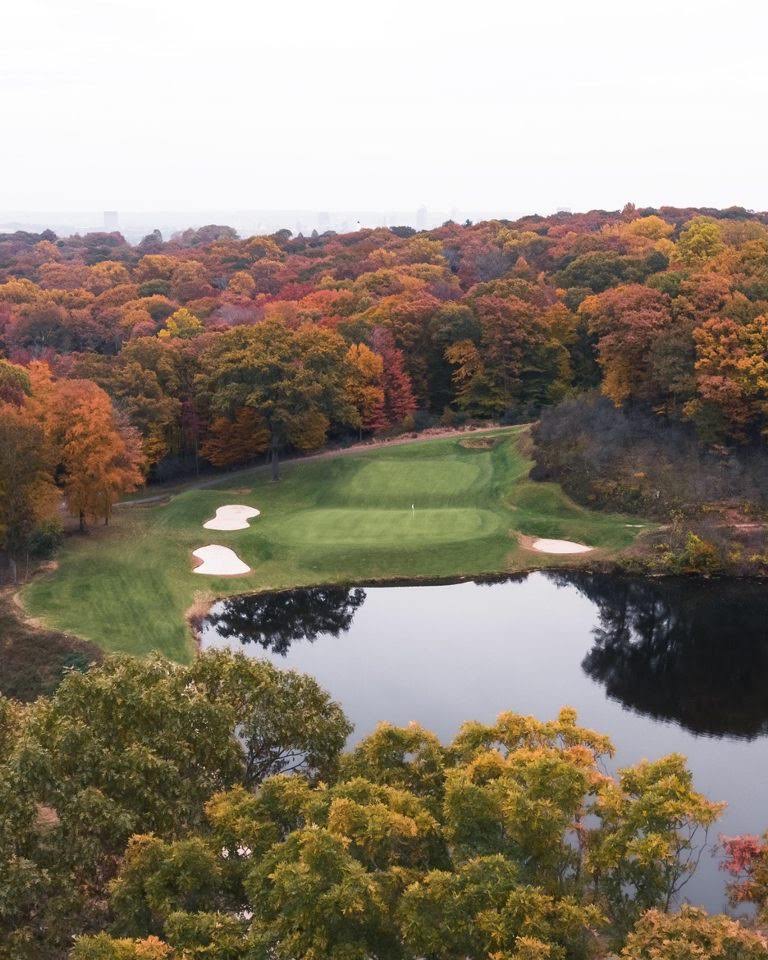
Course Rating estimates the score a scratch player is expected to produce under normal conditions, while Slope Rating expresses how much more difficult the course becomes for bogey players relative to scratch players. They describe related but different ideas. Neither number is the course par, and a higher Slope does not necessarily mean the course is harder for every golfer than a layout with a higher Course Rating.
Course Rating vs Slope Rating at a glance
| Measure | What it represents | How to read it | Common mistake |
|---|---|---|---|
| Course Rating | Expected score for a scratch player in normal conditions | A rating above par indicates a tougher baseline from that tee | Treating it as the average golfer’s expected score |
| Slope Rating | Relative difficulty for bogey players compared with scratch players | Higher slope means difficulty rises more sharply | Reading it as a score or percent |
| Par | Design target used for hole and course scoring | Provides score context | Assuming equal par means equal difficulty |
| Yardage | Measured length from a selected tee | One contributor to rating | Assuming length alone defines challenge |
What Course Rating means
A Course Rating such as 72.4 represents an estimate of the score a scratch player would be expected to shoot from that set of tees under normal course and weather conditions. The decimal matters: the rating is a calibrated value, not simply the course par.
If a par-72 tee has a Course Rating of 74.0, it presents a baseline challenge above par for the scratch standard. If another par-72 tee is rated 69.8, the expected scratch score is lower. That does not guarantee what any individual golfer will shoot; it supplies a standardized reference for handicap calculations and tee comparison.
What Slope Rating means
Slope Rating describes the relative difference in difficulty between bogey and scratch golfers. A course can challenge everyone yet have a moderate slope if difficulty rises at a similar rate. Another course may have a modest Course Rating but a high slope because features penalize the bogey golfer much more severely.
Slope is not measured in degrees, strokes or percentage. In the World Handicap System, 113 is the standard slope used in handicap calculations. Values above or below that point indicate a steeper or gentler relative increase in challenge.
Why two ratings are needed
Golf courses do not affect every skill level equally. Forced carries, recovery demands, narrow landing zones, deep hazards and difficult approaches may cost a bogey golfer disproportionately. A scratch golfer may carry a bunker or control an approach that becomes a layup-plus-recovery sequence for another player.
Course Rating creates the scratch baseline. Bogey Rating estimates performance for a defined bogey standard. The relationship between those ratings produces Slope. Publishing both prevents one scratch-focused number from representing all golfers.
A simple comparison example
Imagine two par-72 tees:
- Tee A: Course Rating 73.5, Slope 125.
- Tee B: Course Rating 71.8, Slope 138.
Tee A has the higher scratch baseline, so it may be more demanding for a scratch player. Tee B has the higher slope, so its difficulty increases more sharply for bogey players. Calling Tee B “harder” without naming the golfer and rating context misses the distinction.
How ratings affect a Playing Handicap
The handicap system uses Slope Rating to scale a Handicap Index for the selected tees, then accounts for the relationship between Course Rating and par when calculating Course Handicap or Playing Handicap under the applicable format and local procedures. Golfers should use an authorized handicap app, club terminal or committee calculation rather than estimating a competition allowance from memory.
The practical point is that a Handicap Index travels, while the handicap used for a round changes with the selected tee and format. Moving forward or back can change both rating inputs and the number of strokes received.
Ratings belong to a tee set—not just a course
Each rated tee combination has its own yardage, Course Rating and Slope Rating. A facility may publish multiple ratings based on different tee markers and player categories. Do not copy the back-tee slope when booking a middle tee or assume a mixed-tee combination has the same values.
Confirm the exact rating on the current scorecard, official course listing or authorized handicap database. Renovations, new tees and rerouting can make older web pages obsolete.
What course raters consider
Length is important, but rating work also examines obstacle factors and how they affect scratch and bogey standards. Elements can include effective playing length, elevation changes, forced layups, roll, wind exposure, altitude, fairway width, rough, recovery, bunkers, penalty areas, out-of-bounds, trees, green targets, surface contours and psychological effects.
This explains why two courses with similar scorecard yardage can receive different ratings. A long open layout and a shorter course with forced carries, small greens and severe recovery demands do not create the same scoring problem.
Course Rating, Slope and tee selection
Ratings are valuable when choosing tees, but they should be combined with carry distance, typical score, pace and enjoyment. A tee with repeated forced carries beyond the player’s reliable distance is a poor fit even when total yardage looks manageable.
Review the par-3 lengths, longest approach holes and carry requirements. Moving forward can improve pace and decision quality without making the round meaningless. Moving back should add a strategic test, not turn most holes into recovery exercises.
Quick tee-selection checklist
- Confirm the exact tee’s yardage, par, Course Rating and Slope.
- Compare required carries with reliable carry—not best-ever distance.
- Review the mix of par-3 and approach lengths.
- Consider wind, elevation, firmness and temperature.
- Choose a tee that permits normal clubs into most greens.
- Use the correct rating in the handicap app before starting.
- Move tees during a casual future round if the initial choice harms pace or enjoyment.
Why high Slope can reveal trouble for average golfers
A high slope often signals features that separate bogey and scratch performance. Examples include long forced carries, hazards placed around common miss zones, difficult recovery from rough or trees, and green complexes that demand precise approach control.
It does not tell you which feature creates the separation. Read a hole map or course guide, inspect carry requirements and ask the golf shop about local trouble. A golfer who drives accurately but struggles from bunkers may experience the same slope differently from a long but inaccurate player.
Weather and temporary conditions
Published ratings assume normal conditions. Wind, cold, saturated fairways, firm greens and temporary tees can change playing difficulty on a particular day. Handicap procedures may apply a Playing Conditions Calculation when enough eligible scores show that conditions differed significantly.
Do not alter the published rating yourself. Post the score using the correct tee and follow the authorized system. For travel planning, treat the rating as a stable benchmark and use weather and maintenance information as a second layer.
Using ratings when booking a new course
Start with the tee table before focusing on the course’s marketing yardage. Compare rating and slope with courses you know, then examine hole-by-hole distances and hazards. This gives a stronger expectation for round length, ball requirements and whether a caddie or cart may help.
Our Golf Courses hub organizes visitor information and course profiles. Before paying, also use our green-fee guide to check cart, caddie, booking and cancellation costs.
Common interpretation mistakes
- Calling Slope Rating the physical steepness of the property.
- Assuming the highest slope always has the highest Course Rating.
- Using ratings from the wrong tee markers.
- Comparing par without comparing Course Rating.
- Choosing tees only by total yardage.
- Treating a rating as a prediction for one individual round.
- Using an old scorecard after tees or routing changed.
Frequently asked questions
Is a higher Slope Rating always harder?
It means relative difficulty rises more sharply for bogey players compared with scratch players. Course Rating is the better baseline measure for scratch difficulty.
What does a slope of 113 mean?
It is the standard slope value used as the reference in World Handicap System calculations. It does not mean the course is easy or that a golfer should shoot 113.
Can a short course have a high slope?
Yes. Forced carries, hazards, recovery difficulty and demanding greens can affect bogey golfers disproportionately even when total yardage is modest.
Why is Course Rating sometimes lower than par?
The scratch scoring estimate from those tees can be lower than the course par because of length and obstacle evaluation.
Do men and women use the same ratings?
A tee may have different published ratings for different rating standards. Use the rating designated for the player and tee in the authorized system.
Where can I find official ratings?
Check the current scorecard, the course, the regional golf association or the authorized handicap database. Prefer current official records over old travel pages.
Bottom line
Course Rating establishes the scratch scoring baseline; Slope Rating shows how quickly difficulty increases for bogey golfers. Use both for the exact tee, then add yardage, carries and conditions to choose a fair test and calculate the correct handicap.
Affiliate disclosure: Golf Buying Guide may earn a commission from qualifying travel or booking links, at no additional cost to you. Recommendations are based on access, practical value and clearly disclosed trade-offs rather than commission.

Leave a Reply