
As an Amazon Associate I earn from qualifying purchases.

Here’s how to choose the right golf ball. Start with a price you’re comfortable paying, then compare two balls on your normal putt, chip and approach. Take the better options to the tee last. Choose the ball that gives you predictable shots and that you can buy often enough to keep playing it.
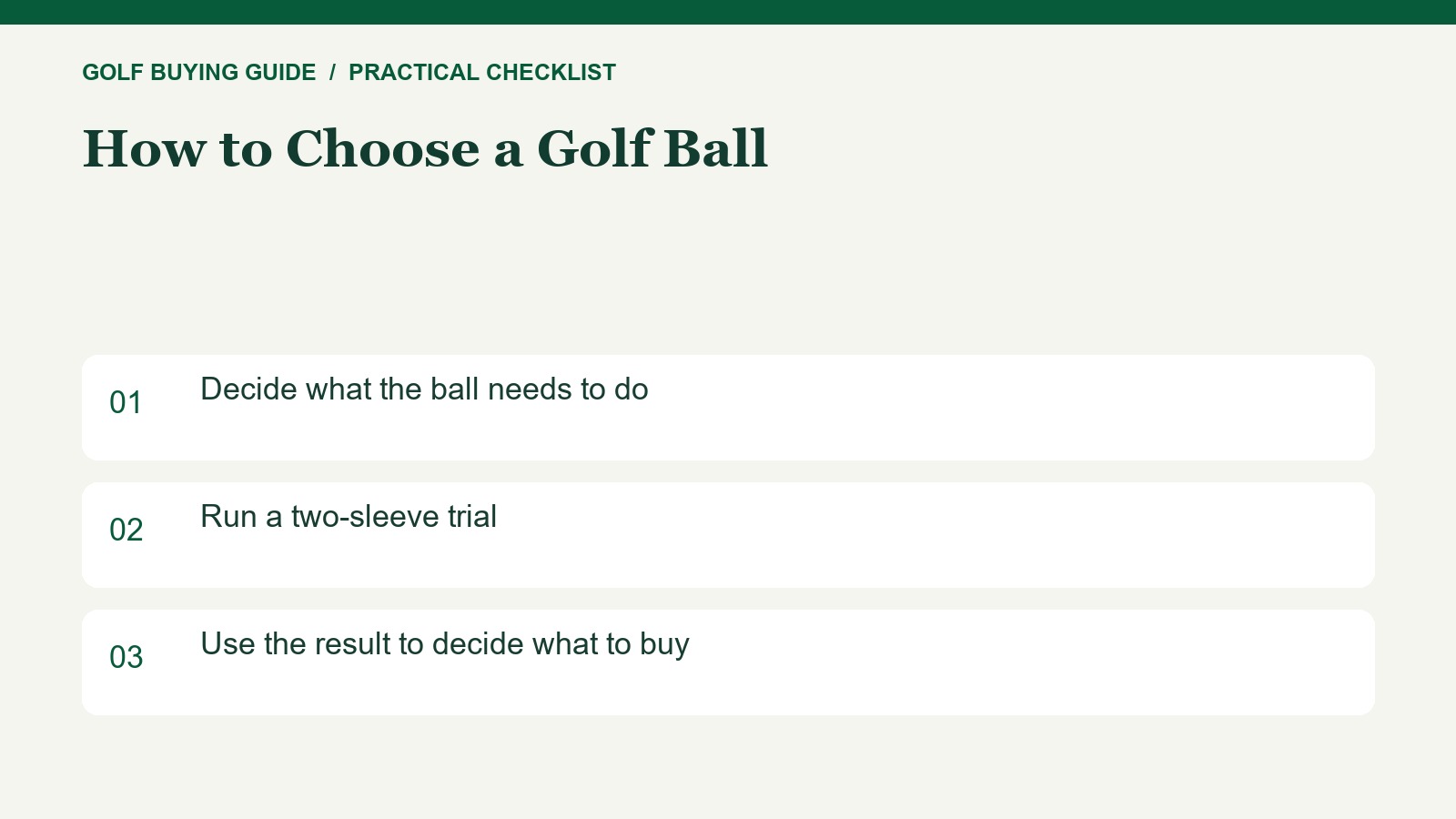
Decide what the ball needs to do
If you often lose balls, start with an everyday model and compare cost per ball. If your chips roll through the landing area, compare two covers from the same lie. If you lose the ball against rough or the sky, compare two colors of the same model. Changing only the color makes that part of the test easier to read.

Compression can help you choose a starting feel. It does not give you a guaranteed distance or spin. Our golf ball compression chart explains how to compare numbers. The urethane versus ionomer guide covers one important difference in cover design.
Run a two-sleeve trial
- Roll short and long putts with your current ball and the candidate.
- Chip both balls toward the same landing area and note the rollout.
- Hit the pitch you use when there is little green beyond a bunker.
- Compare ordinary mid-iron carry and where the shot stops.
- Finish with driver and record the usual miss, not only the longest shot.
Use the same clubs, ball condition and target. If the first ball gets a downhill chip and the second gets a flat one, you have changed the test. Alternate small groups of shots instead. Our best golf balls for high handicappers gives you three everyday candidates to start with.

Use the result to decide what to buy
If one ball feels easier on the putter and flies about the same off the tee, you have a reason to choose it. If a more expensive ball stops sooner on a pitch you play often, see whether that is worth the price. If the results are close, buy the one you can find in the finish you want and play it for several rounds.
If the ball runs off the back even after a decent strike, compare your landing angle and loft as well. The pitching wedge loft guide helps you check the club side of the problem.
Keep a result you can repeat next month
Write down the exact model and the ball you compared it with. Note the pitch that mattered, the usual mid-iron carry and where you could see the ball best. If the result changes in colder weather or on firmer greens, repeat the same short test. Use one ball during a comparison so changes in feel are easier to spot.
FAQ
Should a beginner buy a premium ball?
Start with a ball you can afford to replace and test it around the green. A premium ball can be worth trying once you know the short shot you want it to improve.
Is compression more important than the cover?
They describe different things. Compare feel, launch and short-game response with the actual ball rather than deciding by one spec.
Can I switch balls between rounds?
Yes. Keep one model during your comparison and play several rounds with it so you can learn the result.
What is the fastest way to narrow the choice?
Pick a price and test two balls with the same putter and wedge. Move the better candidates to longer shots.
