
- Status
- Open
- Access
- Public
- Location
- New Haven, united-states
- Holes
- 18
- Architect
- Charles Blair Macdonald and Seth Raynor; restored by Gil Hanse
Yale Golf Course reopened to public play on April 28, 2026 after a comprehensive Gil Hanse-led restoration. This profile separates verified changes from editorial interpretation so golfers can understand what is new, who may book, and what to check before planning a round.
Quick answer
The restoration is significant because it was designed to recover the scale and strategic intent of Charles Blair Macdonald and Seth Raynor’s 1926 layout, rather than replace it with a different course. Yale says greens, tees, bunkers and fairways were expanded toward their historic dimensions, while modern drainage, irrigation and green construction were added beneath the classic architecture.
- Status: reopened in 2026 and open to the public.
- Location: New Haven, Connecticut.
- Format: 18 holes; new championship tees extend the course beyond 7,000 yards.
- Original designers: Charles Blair Macdonald and Seth Raynor.
- Restoration architect: Gil Hanse.
- Best for: architecture-minded golfers comfortable with bold contours, deep hazards and strategic angles.
What changed for 2026
According to Yale Athletics, the project returned major playing features to their original scale. The Double Punch Bowl green at the third was rebuilt to its 1926 design; the double-fairway concepts at holes 3 and 18 were restored; and the unusual inverted bunkers at the sixth were brought back. Those details matter because template features work as a connected system: width creates choices from the tee, hazards influence the preferred line, and green contours reward the correct angle.
The less visible work is equally important. Yale reports that the green complexes were reconstructed to USGA specifications for the first time, a new irrigation system was installed with water conservation in mind, teeing areas were expanded, trees were managed to recover sight lines, and cart paths were improved. The greens use a bentgrass and fescue blend developed for the property’s growing conditions.
How the course should play
Yale has long been associated with large landforms, elevation changes, broad fairways and severe-looking bunkers. Width does not automatically make the course easy. On strategic architecture, the generous side of a fairway can leave a more demanding approach, while a line nearer a hazard can open a green. The restoration’s stated goal suggests that golfers should expect those decisions to be clearer than before the closure.
First-time visitors should avoid choosing tees solely by total yardage. More than 7,000 yards is the maximum published championship length, not the target for every golfer. Choose a set that lets you reach most par fours with a reasonable approach club. That makes the template greens and angles relevant instead of turning every hole into a recovery exercise.
Access and booking
Yale’s 2026 FAQ explicitly says the course is open to the public and does not offer memberships. Tee times are booked online through Whoosh. Yale affiliates can book 14 days ahead; non-affiliates can book 10 days ahead. The published in-season schedule is Tuesday through Sunday, with Monday closures and additional blackout dates possible for events, maintenance or weather.
Because the calendar includes university events and planned closures, verify the date before arranging travel. Register in the booking system early, and confirm the rate, cart or walking rules, cancellation terms and any player-registration requirements at checkout.
Who it is for
This is a strong destination for golfers interested in Golden Age design and restoration. It also suits players who enjoy solving angles rather than simply aiming down the center. Beginners can still visit, but should select forward tees, allow extra time around large contoured greens, and read the course rules before arrival.
Planning checklist
- Check the official booking calendar for the exact day and price.
- Review closure dates and weather before traveling.
- Select tees by typical carry distance and approach-club comfort.
- Bring a complete set and bag; Yale’s terms require each player to have their own.
- Allow time to study unfamiliar green shapes and safe miss areas.
Editorial assessment
On the verified evidence, Yale belongs on a 2026 course watchlist because the reopening combines a historically important design with a substantial, documented restoration. We are not assigning a star rating or claiming post-restoration playing conditions without an on-site review. The defensible conclusion is narrower: the architectural features, infrastructure program and public-access policy make it unusually relevant to golfers planning a Northeast course trip.
Frequently asked questions
Is Yale Golf Course open to the public?
Yes. Yale’s official FAQ says public golfers may book, with a shorter advance window than Yale affiliates.
When did the restored course reopen?
Yale announced public reopening for April 28, 2026.
Was it redesigned?
Yale characterizes the work as a restoration of the Macdonald–Raynor vision, led by Gil Hanse, alongside modern infrastructure upgrades.
Are the photos on this page post-restoration?
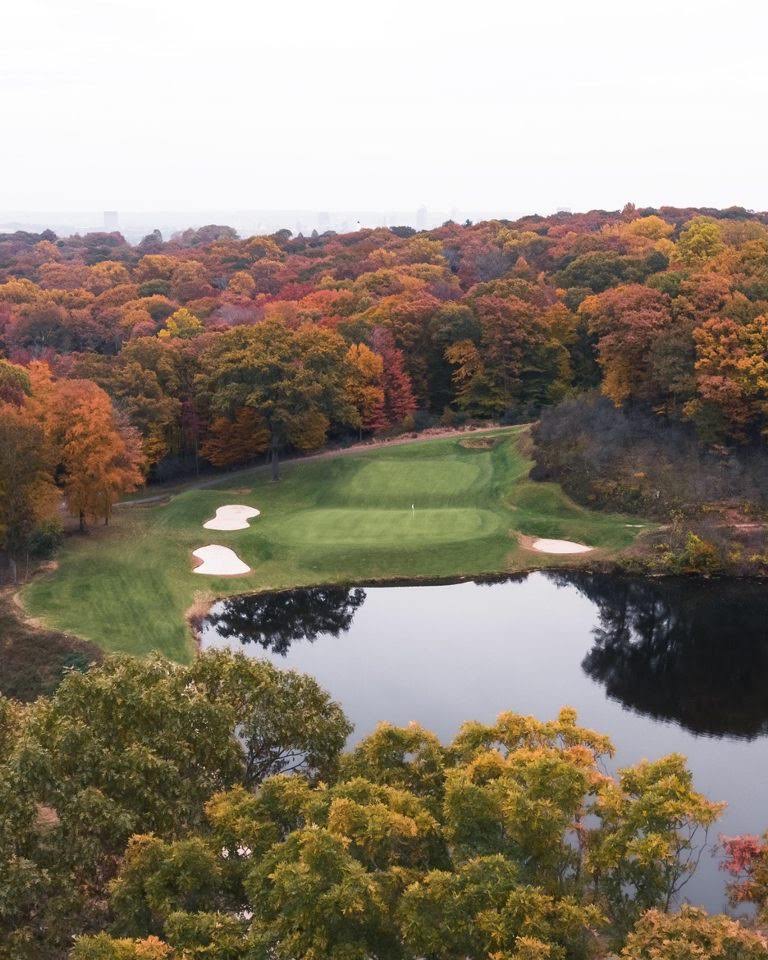
No. The featured photograph was taken in 2020 and identifies the property; it is not presented as evidence of 2026 conditions. The restoration facts come from Yale’s official 2026 announcement.
Sources and image rights
Primary facts were checked against Yale Athletics’ reopening announcement, course page, facility page, FAQ and terms. Featured image: “9th at Yale aerial.jpg,” Blakebrantley642, licensed CC BY-SA 4.0 via Wikimedia Commons. No endorsement by the photographer or Yale is implied.
