
Disclosure: Golf Buying Guide may earn a commission from qualifying purchases made through retailer links, at no extra cost to you. Product availability, specifications and prices can change.
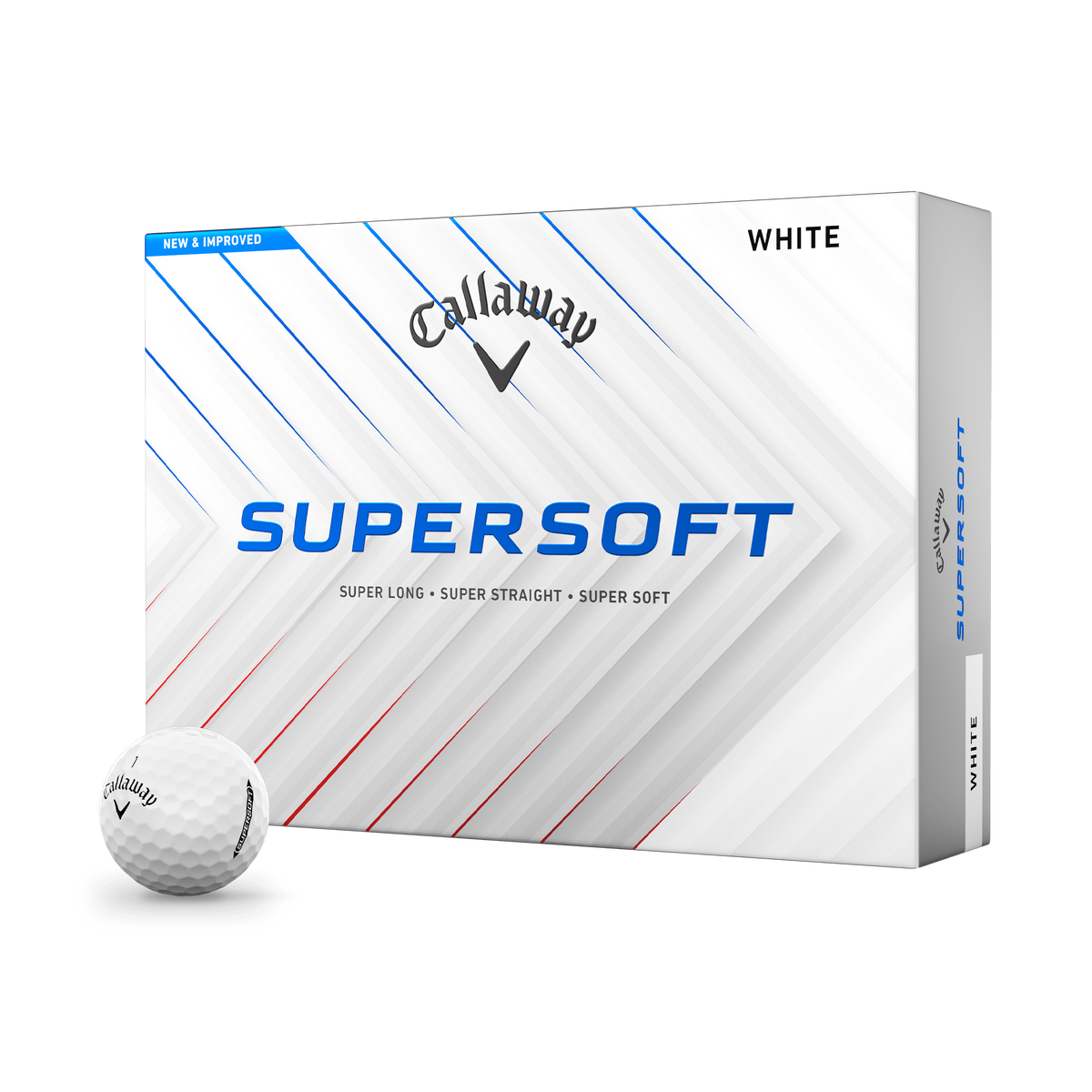
Featured image source: Official product image: Callaway Supersoft.
High handicappers should choose a ball they can afford to play consistently and identify easily. Construction and feel influence launch, spin and short-game response, but no ball permanently corrects a slice or replaces centered contact. The best test is to play one model for several rounds and compare approach stopping, putting pace and total score—not one unusually long drive.
Quick picks
| Option | Best use | Best for | Action |
|---|---|---|---|
| Callaway Supersoft | Best soft all-round value | Players who prefer soft feel and multiple visibility choices. | View options |
| Titleist TruFeel | Best traditional soft choice | Golfers who want a soft Titleist model at a non-tour price. | View options |
| TaylorMade SpeedSoft | Best soft-speed alternative | Players seeking a soft ball without premium-tour pricing. | View options |
| Srixon Soft Feel | Best established value option | Moderate-speed golfers who want an established soft two-piece model. | View options |
| Bridgestone e12 Straight | Best straight-flight concept | Players specifically comparing a lower-curvature construction. | View options |
How we selected these options
We compared official construction and positioning, color options and the practical trade-off between durable ionomer distance balls and higher-cost multilayer models. We did not treat swing speed as a rigid ball-selection rule.
We prioritized fit and predictable outcomes over a single marketing number. A club or ball that helps one golfer can create the wrong launch, spin, curvature or feel for another. Use this shortlist to narrow the field, then confirm the specification, handedness, shaft, set makeup, return policy and warranty before paying.
Best soft all-round value
Callaway Supersoft

Who it’s for: Players who prefer soft feel and multiple visibility choices.
Callaway positions Supersoft around increased speed, soft feel and tee-to-green control in a durable construction.
Pros
- Soft feel
- Many color options
- Accessible price category
Cons
- Less premium greenside behavior than tour urethane
- Very soft feel is subjective
What to verify: Buy one dozen first and compare putting pace and approach release.
Best traditional soft choice
Titleist TruFeel

Who it’s for: Golfers who want a soft Titleist model at a non-tour price.
TruFeel is Titleist’s soft-feel distance offering with a straightforward two-piece value position.
Pros
- Recognizable flight and feel category
- Durable cover
- Color options
Cons
- Not a tour-urethane ball
- Soft response may feel muted
What to verify: Confirm the current generation rather than mixed old stock.
Best soft-speed alternative
TaylorMade SpeedSoft

Who it’s for: Players seeking a soft ball without premium-tour pricing.
SpeedSoft targets soft feel while retaining speed for everyday golfers.
Pros
- Value-oriented family
- Soft feel
- Distinct visual variants available
Cons
- Visual editions cost or stock can vary
- Short-game preference needs testing
What to verify: Compare standard and visual versions only if construction is identical.
Best established value option
Srixon Soft Feel

Who it’s for: Moderate-speed golfers who want an established soft two-piece model.
Soft Feel is positioned around a soft core, distance and a responsive short-game feel.
Pros
- Long-running model family
- Soft impact feel
- Good value category
Cons
- Not designed for maximum tour-level wedge spin
- Generation must be verified
What to verify: Check model generation and color before comparing price.
Best straight-flight concept
Bridgestone e12 Straight
Who it’s for: Players specifically comparing a lower-curvature construction.
The e12 Straight is marketed around reducing sidespin and promoting straighter flight.
Pros
- Clear flight objective
- Multiple colors
- Mid-price alternative
Cons
- Cannot fix face-to-path errors
- Feel and greenside response remain personal
What to verify: Measure actual curvature against your normal ball rather than trusting the label.
How to choose the right option
Test from the green backward. If two balls travel similarly from the tee, choose the one that gives more predictable chips, pitches and putts. Use the same model long enough to learn its carry and release before changing.
Visibility is performance when lost balls create penalties and slow play. Yellow or high-visibility finishes can help some golfers, but matte covers and bold patterns are personal. Check tournament conformity and avoid mixing models during a comparison.
Who should use this guide?
This guide is for higher handicappers, newer golfers and value-conscious players who want a dependable everyday ball. Golfers who generate reliable contact and demand more greenside spin may prefer a urethane model after direct testing.
Common buying mistakes
- Buying from one perfect simulator shot instead of comparing typical dispersion.
- Choosing a model before confirming length, loft, lie, shaft, grip and set composition.
- Assuming “forgiving” means every golfer will launch or curve it the same way.
- Ignoring delivery, adjustment, return and warranty terms.
- Replacing equipment when a lesson, gapping check or setup change would solve the problem.
Frequently asked questions
How should I compare a new option with my current equipment?
Establish a baseline first. Use the same ball, target and warm-up, then alternate between your current equipment and the candidate instead of hitting one long block with each. Keep ordinary misses in the sample. Record carry, start direction, curvature, strike location and the width of the complete pattern. For putters and balls, add pace control and short-game results. For a service or used-equipment decision, compare the written specification and total cost in the same structured way. Stop when fatigue changes the swing and repeat the test later if the result is close.
What costs should I include beyond the advertised price?
Include fitting fees, upgraded shafts or grips, missing clubs, adjustment work, shipping, tax and likely replacement items. A cheaper option is not good value if it needs immediate rebuilding, while a new premium model is difficult to justify when a properly fitted prior generation produces the same practical outcome. Ask for an itemized specification and save the receipt, serial information and fitting sheet. Confirm who handles warranty work and whether a custom order can be changed or returned.
What should I do after buying?
Photograph the original setup, keep adjustment tools and test the equipment over several normal rounds. Track patterns rather than memorable shots. Clean and inspect it regularly, and avoid making multiple setup changes at once. If performance is poor, verify loft, lie, length, settings and gapping before replacing the item again.
Can a golf ball fix a slice?
No. A lower-spin design may influence curvature, but face angle, path and strike dominate.
Should high handicappers use cheap balls?
Use a ball affordable enough to play consistently, while still meeting your feel and short-game needs.
Do slow swing speeds require low compression?
Not as a universal rule. Test launch, carry and feel instead of using one threshold.
Are colored balls legal?
Color alone is not the issue; use a model on the applicable conforming-ball list for competition.
How many rounds should a ball test last?
Several rounds and short-game sessions provide a more reliable picture than a few driver swings.
Related guides
See our beginner golf-ball guide, ball-finder glasses guide and beginner pillar.
Sources and update policy
Product facts were checked against the linked manufacturer pages on August 11, 2026. Manufacturer photography is used editorially to identify the equipment and is stored locally to avoid hotlinking. We recheck models, specifications and retailer availability during scheduled content reviews.
Final decision worksheet
Before ordering, write down the problem you want the purchase to solve, your current baseline, the specification tested and the return conditions. Rank the candidates for typical performance, confidence, fit, total cost and after-sale support. Reject any option that wins only because of one exceptional shot or an unverified seller claim. If two choices remain close, select the simpler build or the one with better local service rather than paying for a feature you cannot measure.
Recheck handedness, loft, length, shaft or construction, grip, color, quantity and included accessories on the final cart page. Save a copy of the listing and order confirmation because online descriptions can change. This short worksheet makes the decision reproducible and gives a fitter or retailer useful information if the delivered product does not match the order.
Leave a Reply