
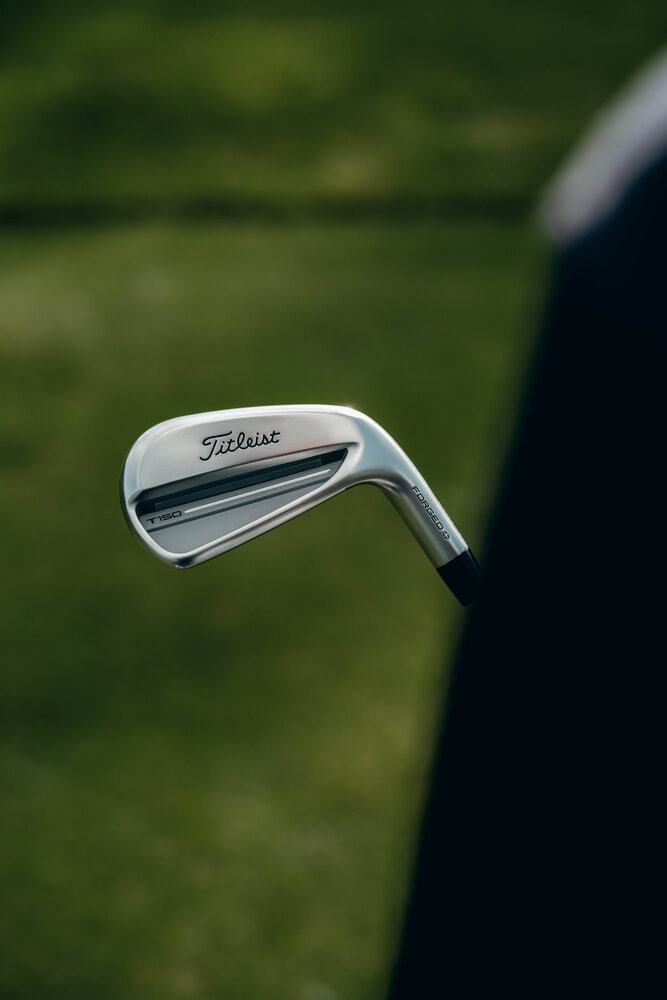
Game-improvement irons prioritize launch, ball-speed retention and stability on imperfect strikes, while players irons prioritize compact shaping, precise turf interaction and predictable control for golfers who consistently find the center. The categories overlap more than their names suggest. Modern forged players-distance and compact game-improvement models can blend traits from both sides.
Game-improvement vs players irons at a glance
| Feature | Game-improvement iron | Players iron |
|---|---|---|
| Head size | Medium to large | Compact |
| Sole | Usually wider with more bounce/camber | Usually narrower and more precise |
| Offset | Often moderate to high | Usually low to moderate |
| Launch help | Higher priority | Depends more on delivery and loft |
| Miss-hit retention | Greater design emphasis | Less protection away from center |
| Who it suits | Golfers needing easier height and consistency | Consistent strikers valuing control and compact looks |
What “game improvement” actually means
A game-improvement iron uses mass distribution, cavity design, face technology, sole geometry and often stronger lofts to make useful distance and launch easier across a larger portion of the face. Perimeter weighting can increase stability, while a low center of gravity helps shots launch.
Forgiveness does not make every miss good. A heavy strike remains short and a face delivered open remains open. The benefit is that modest toe, heel or low-face misses may lose less speed and direction than they would with a compact head. Read our guide to comparing real iron forgiveness for the metrics and tests that matter.
What defines a players iron
Players irons traditionally use a compact profile, thinner topline, shorter blade length and limited offset. Muscle-back blades sit at the most demanding end, but many cavity-back players irons add stability while retaining compact shaping. The category aims to give skilled golfers predictable launch, spin, distance and turf interaction.
The phrase “workability” can be misunderstood. Any iron can curve a ball when face and path differ. Players irons may provide less corrective stability and a shape that accomplished players prefer when changing trajectory. That does not mean they automatically create more spin or better accuracy.
The middle category: players-distance irons
Players-distance irons combine compact visual cues with hollow construction, thin faces, internal weighting or other speed technology. They can create more ball speed than a traditional one-piece players cavity while maintaining a smaller profile than a full game-improvement head.
The trade-off can be distance variability. A thin, flexible face may produce occasional “hot” strikes, and stronger lofts can lower spin. Fit the model by carry windows, descent angle and front-to-back dispersion—not by the longest 7-iron. A golfer who gains ten yards but cannot hold a green has not necessarily improved the set.
Loft can disguise the comparison
Two irons carrying the same number may have meaningfully different lofts and shaft lengths. A game-improvement 7-iron can be closer in static loft to a traditional players 6-iron. More distance may come from the specification as well as the head technology.
Compare clubs at similar loft or compare the role each club fills in the set. Look at launch, spin, peak height and descent angle. Strong loft is not inherently bad when low center of gravity maintains a playable flight, but the resulting gaps must work from the longest iron through the wedges.
Forgiveness: measure the normal miss
Face tape or spray makes the comparison honest. Hit enough shots to reveal the player’s usual pattern, then compare carry loss and lateral dispersion for those locations. A model that protects toe strikes is valuable only if the player actually misses toward the toe.
Do not remove poor swings from the data simply because they look unattractive. The purpose of forgiveness is performance on imperfect contact. At the same time, do not let one extreme miss define the entire decision. Compare the central cluster and the common miss.
Launch, spin and stopping power
Game-improvement irons often launch easily, but strong loft can reduce spin. Players irons may use weaker lofts and produce more spin, yet a golfer without enough speed or centered contact may launch them too low. The target is a usable combination of carry, peak height and descent.
For a mid iron, ask whether shots land steeply enough to hold the greens normally played. For the longest iron, compare a hybrid or fairway wood if launch becomes marginal. The best iron set does not have to contain traditional 4-through-pitching-wedge makeup.
Sole width and turf interaction
A wider sole can resist digging and help a steep player through soft turf. Camber and relieved edges prevent width from feeling clumsy. A narrow sole can enter firm ground cleanly and appeal to a precise striker, but it may punish a steep delivery when conditions are soft.
Test from grass whenever possible. Mats make fat contact look better and hide how the sole exits the ground. Divot depth, strike and ball flight should be evaluated together rather than treating a clean-looking divot as the only goal.
Offset and face presentation
Offset positions the leading edge behind the front of the hosel. More offset can provide visual confidence, influence face presentation and support launch for some golfers. Other players dislike the look or deliver the face left more often with high-offset designs.
Low offset is not automatically more accurate. Alignment, face angle and delivery determine direction. Choose the amount that helps the player aim and return the face predictably.
Who should choose game-improvement irons?
- Golfers with strike spread across a relatively large face area.
- Players who need more height or carry from mid and long irons.
- Golfers whose common toe or low-face miss loses excessive distance.
- Players who value simple launch and consistency more than compact looks.
- Golfers returning after a break or playing with limited speed.
Our irons for high handicappers guide applies these criteria to the needs that commonly matter most.
Who should choose players irons?
- Consistent center strikers with predictable low-point control.
- Golfers who create sufficient launch and speed without help.
- Players who value compact shaping and narrow turf interaction.
- Golfers whose dispersion and distance control improve with a less active face.
- Players prepared to accept greater loss on poor contact.
Use our low-handicap iron buying guide to examine control, set makeup and fitting trade-offs in more detail.
Can a mid-handicap golfer play players irons?
Yes. Handicap combines driving, short game, putting and penalties; it does not measure iron contact alone. A mid-handicap golfer with reliable iron striking may fit a compact cavity or blended set. Conversely, a low-handicap player can benefit from game-improvement technology in the long irons.
Use strike and dispersion data instead of an eligibility label. The question is whether the smaller head improves control enough to justify its miss-hit cost.
Blended sets: a practical solution
A blended set uses more forgiving long irons and more compact scoring irons. This can increase launch where speed and strike are most challenged while preserving preferred feel and turf interaction in shorter clubs.
Check loft gaps, sole transitions, offset changes and shaft consistency at the blend point. Two adjacent model numbers do not guarantee a logical carry gap. Hit the exact transition clubs and bend loft only within manufacturer and fitter guidance.
A useful fitting protocol
- Record the current set. Measure actual loft, lie, length, shaft and carry.
- Choose comparable test heads. Avoid comparing radically different shaft weights at first.
- Test a 7-iron, then a long and short iron. One demo club cannot represent the set.
- Mark the face. Compare retention on the player’s real miss.
- Track front-to-back dispersion. Longest is not automatically best.
- Assess landing performance. Peak height and descent must fit the greens played.
- Hit from grass. Confirm sole interaction and low-point tolerance.
- Build the set by carry gaps. Replace hard-to-launch long irons if necessary.
Lie and length influence every comparison. Review our upright vs flat lie-angle guide and club-fitting measurement checklist before finalizing specifications.
Buying mistakes to avoid
- Choosing the smallest head for appearance or status.
- Comparing 7-irons without checking loft and shaft length.
- Using only the best five strikes from a fitting.
- Ignoring long-iron launch and short-iron distance control.
- Assuming forged means unforgiving or cast means game improvement.
- Ordering a full set before checking the blend and wedge gaps.
- Buying used irons without measuring altered loft and lie.
Frequently asked questions
Do players irons go shorter?
They may carry shorter when loft is weaker or miss-hit speed loss is greater. Compare actual loft, launch and centered-strike performance rather than category alone.
Are game-improvement irons less accurate?
Not inherently. They can improve dispersion by retaining speed and stability. A poor fit in loft, offset, shaft or lie can still create inconsistent results.
Do better golfers need blades?
No. Many strong players use cavity-back or blended sets because scoring depends on predictable outcomes, not construction prestige.
What is a super game-improvement iron?
It is an informal category emphasizing maximum launch, larger heads, wide soles and strong miss-hit protection. Definitions vary by brand and retailer.
Can I blend different iron brands?
Yes, if carry gaps, shafts, length, lie and feel work together. Matching model names matters less than verified set performance.
Bottom line
Game-improvement irons protect common misses and help create playable launch; players irons reward consistent contact with compact shaping and controlled response. Test complete sets by strike, dispersion, landing performance and turf interaction, then choose the smallest profile that remains reliable on ordinary swings.
Affiliate disclosure: Golf Buying Guide may earn a commission from qualifying purchases made through links on this site, at no additional cost to you. Recommendations are based on fit, intended use and trade-offs rather than commission.

Leave a Reply