
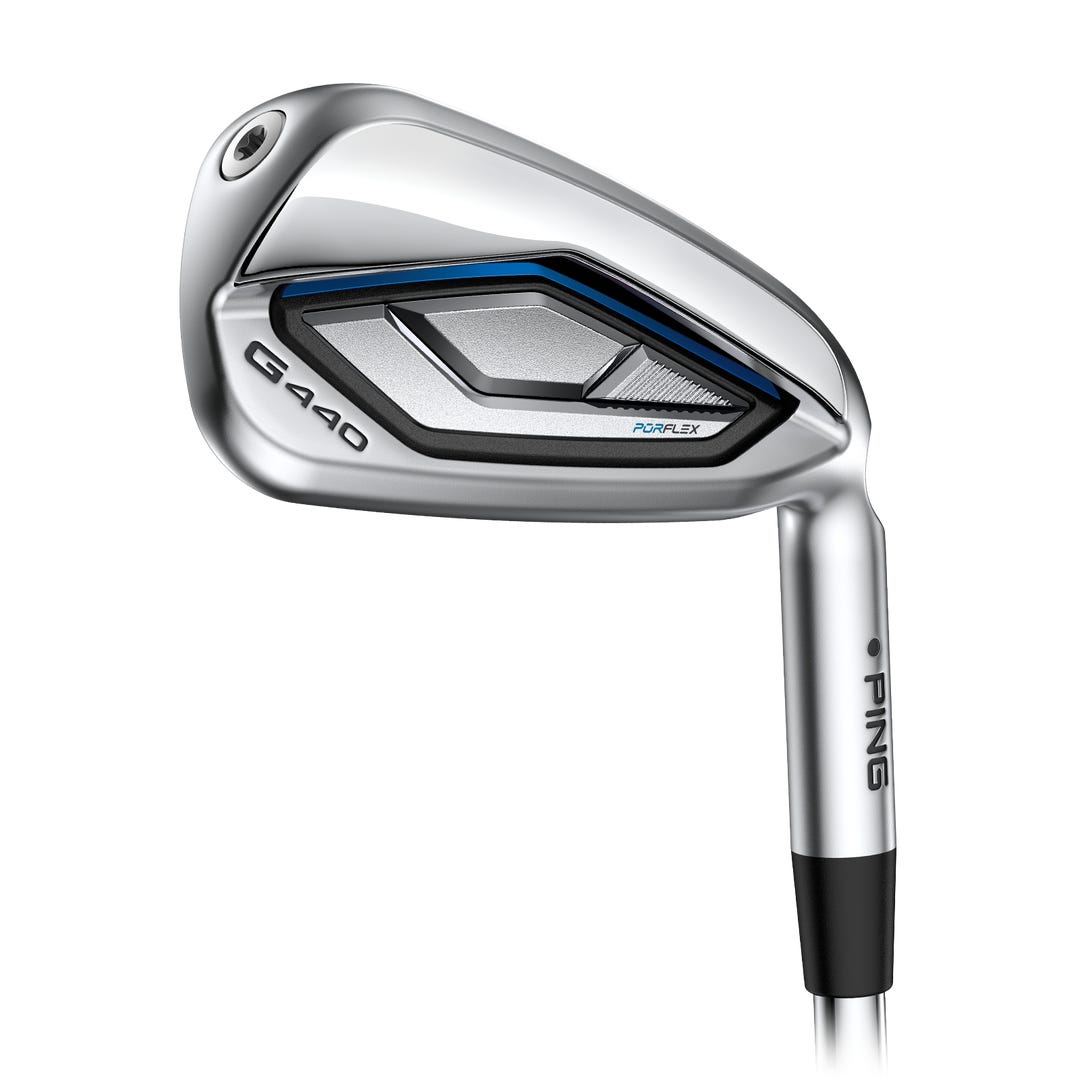
The best mid handicap irons give you a useful carry window even when you miss the middle. Start with PING G440 if strike varies across the face. Try the 2025 TaylorMade P790 if you like a cleaner look and want a hollow players-distance iron. Compare the 2025 Srixon ZXi5 if you prefer a cavity-back shape with a little more loft in the mid-irons. Bring your own 7-iron to every trial.
The longest 7-iron in a fitting can leave you with the wrong set. What matters is whether the whole set gives you predictable distances and a flight that stops where you need it to. Check the longest iron you plan to carry and the first wedge you’ll use with the set.
As an Amazon Associate I earn from qualifying purchases.
Compare the best golf irons for mid handicappers
| Model | Design | Stock 7-iron loft | Stock PW loft | First reason to try it |
|---|---|---|---|---|
| PING G440 | Game-improvement cavity back | 29° | 42° | You want help on common mishits and loft options to test |
| TaylorMade P790 (2025) | Hollow players-distance iron | 30° | 44° | You want a compact-looking head and speed on normal strikes |
| Srixon ZXi5 (2025) | Players cavity back | 31° | 44° | You want a moderate profile and a different sole through turf |
These are manufacturer specs for the listed stock configurations. Custom lofts can change the numbers. The printed iron number alone gives little information about launch or carry. Match the club and generation when comparing a used listing against the table.
PING G440 — For a strike that moves around the face

The G440 makes sense if you often catch the ball thin or toward the toe and want an iron with more help than a compact players head. PING lists a 29° standard 7-iron and alternative Power Spec and Retro Spec lofts. If the standard build already gives you enough height, compare it with the current club before assuming you need a loft change.
Test the longer clubs, too. A new 7-iron that clears a front bunker means little if the matching 5-iron flies too low to hold a green. Hit the longest iron you expect to order and compare its carry with the club directly below it. If the two shots bunch together, try a hybrid in that spot.
Pros: Three loft configurations to discuss with a fitter and a clear set-wedge progression. Useful starting point if the usual miss needs more carry.
Trade-offs: The standard PW is 42°. Price the next wedge in the setup and see what it actually carries before buying a full set.
TaylorMade P790 (2025) — For a cleaner look with help on contact

The 2025 P790 is a hollow iron with a forged face. It makes sense if you want a more compact look behind the ball and still want help carrying a shot that catches a little low on the face. TaylorMade’s spec sheet lists a 30° 7-iron and a 44° pitching wedge for this generation.
Compare the short and long ends of your pattern. One extra-long shot can make a set look great in the bay and give you the wrong impression for a front pin. A good fitting result has a predictable landing area on ordinary strikes. Try the longest P790 iron you intend to buy, especially if long irons already give you trouble.
Pros: Compact-looking players-distance shape and published specs that are easy to verify. Worth testing if you like a cleaner look at address but need more help than a traditional blade offers.
Trade-offs: A different generation can have different lofts. The hollow design is only useful if it gives you an approach flight that holds a green with your delivery.
Srixon ZXi5 (2025) — For players who want a cavity-back profile

The 2025 ZXi5 has a wider sole than the ZXi7 and a 31° stock 7-iron. Give it a try if you prefer a cavity-back head and want a sole that feels different through the ground from your current irons. Hit a few balls from grass if possible. The way a club enters and exits turf can be hard to judge from a forgiving mat.
The 44° pitching wedge can sit next to the same wedge loft as the P790, even though the 7-irons are one degree apart. Check your scoring clubs separately. If you’re shopping used, match the 2025 model to the maker’s prior-generation page. Srixon also uses the ZXi5 name on a newer model.
Pros: Moderate head shape and a defined path to a mixed set. Published 31° 7-iron gives you a different comparison from stronger game-improvement models.
Trade-offs: A player whose long irons come out low may want a more forgiving top end or a hybrid. Availability for a prior-generation set can vary by shaft and hand.
Choose by the shot that costs you strokes
If your misses finish short
Set a target you expect to reach with your 7-iron. Compare the current club with the candidates using the same ball. Track the front edge of the pattern on ordinary misses. If a stronger loft gives you more distance and still lands at an angle you can use, keep it in the comparison. If a model launches low and releases across the back edge, test more loft or a different build.
If the distance varies more than the direction
Use one target and note where each ball lands. Compare the spread from short to long and keep a record of the strike. Check whether the long shots came from the middle, a flyer lie or a different swing. The comparison of cavity backs and hollow irons above explains why two irons in the same broad category can behave differently.
If you lose confidence in the longest irons
Compare 5-iron and 6-iron carry before you order. If the difference is small, hit a hybrid against the 5-iron. Look at the height and landing spot on both clean and ordinary strikes. You can buy a set starting at 6-iron if the hybrid earns the next slot.
Do the same at the short end. Check the first wedge against the PW on a full shot and a shorter approach. Our pitching wedge loft guide shows how to work from carry. The senior irons roundup covers lighter builds if fatigue or a lower launch is a bigger concern than head shape.
Compare complete orders
Write down the head, model year, shaft, length, lie and the clubs included. The quoted price can look lower because one set ends at PW and another includes a gap wedge. Ask which long iron you tested and whether the shop can price a set without a club you won’t carry.
A combination set can work when the longer heads launch well and the short irons fit your eye. Test the two clubs on either side of the transition. The stamp on the sole won’t tell you whether the gap is right.
A range test that makes the iron decision easier
Start with the same target and ball
Pick a target at your typical 7-iron carry. Hit your current club and two candidates in alternating small sets. Mark where each ball strikes the face and keep the usual misses. If a demo club is more upright, shorter or lighter, record it. Those changes can move the pattern even when the head shape looks similar.
A useful comparison includes where the balls land and what they do after. A launch monitor can help you read peak height and landing angle. On a practice hole, aim at a real green and look at where the ball finishes. An iron that carries a bit shorter but stops consistently might give you a better chance to attack a front flag.
Try a second target with less room
Pick a spot between your normal 7-iron and 8-iron carry. Hit a slightly shorter shot with each 7-iron. See whether you can move the landing point without making the shot much harder to hit. The test gives you another way to compare how the club feels on a swing you might actually make on the course.
On grass, check the lie that normally gives you trouble. If you play a lot of tight turf, try a few from a closely cut area. If you often hit from soft ground, compare how each sole moves through it. The fitting bay still helps you compare ball flight, while turf tells you how the head interacts with the course.
Decide which club to keep at either end
Check the longest iron against the longest club you trust. At the short end, try the set PW and your current gap wedge. If the new PW carries much farther, you may need to order another club. If it already flies the distance you need, keep your next wedge and spend the difference on something you’ll use.
The order can be smaller than the demo set. Ask the fitter to price the clubs by number and verify the loft, hand and shaft of any matching wedge. A lower per-set price only helps if you’ll use the clubs that come with it.
FAQ
What are the best golf irons for mid handicappers?
G440, 2025 P790 and 2025 ZXi5 give you three distinct starting points. Compare the model that helps your common miss with the iron you already play. The useful result is a tighter group of shots at the distance you need.
Are players-distance irons good for a mid handicapper?
They can be a fit if you like the shape and produce enough height. Hit a long iron and check your carry spread before buying. A larger cavity back may give you more confidence if your contact varies a lot.
Should a mid handicapper buy a 4-iron?
Buy it if you can get useful height and a clear carry gap beyond the 5-iron. Compare a hybrid or fairway wood if the 4-iron flies low or carries about the same distance.
Should I compare iron sets by loft?
Use loft to understand part of the distance difference. Compare launch, height, landing and the overall set gaps before deciding. Two irons with the same loft can perform differently for the same player.
Leave a Reply