
Editorial note: This guide explains fitting principles, not a universal prescription. Labels and specifications vary by manufacturer. Compare complete club builds and use measured ball flight whenever possible.
A beginner driver loft should help create reliable carry, not simply the lowest spin or longest simulator rollout. For many beginners, 10.5° or 12° is a more useful starting test than a low-loft head, but impact delivery and strike can reverse the expected result.
Choose loft for carry and control
Driver loft influences launch and spin, but the number printed on the sole is only part of the delivered loft at impact. Hand position, attack angle, face orientation, shaft deflection and strike location all change the flight. Two golfers using the same 10.5° head can produce very different trajectories.
Beginners should prioritize a window that stays airborne long enough to create carry without ballooning. Total distance on a firm simulator setting can reward low flight and rollout that will not help on a wet course or when a bunker must be carried.
What to compare at each loft
Launch angle
Launch that is visibly too low often costs carry, especially at moderate speed. Higher loft is a logical test, but also check low-face strike because impact below the center can reduce launch and add spin.
Spin
Spin helps keep the ball airborne, yet too much can reduce forward distance and make wind performance unstable. Do not pursue the lowest number. Find a combination of launch and spin that produces repeatable carry.
Strike location
Use face spray or impact tape. High-center contact can launch higher with lower spin than low-face contact. If changing loft also changes confidence or tee height, identify whether the improved result came from the setting or the strike.
Start direction and curvature
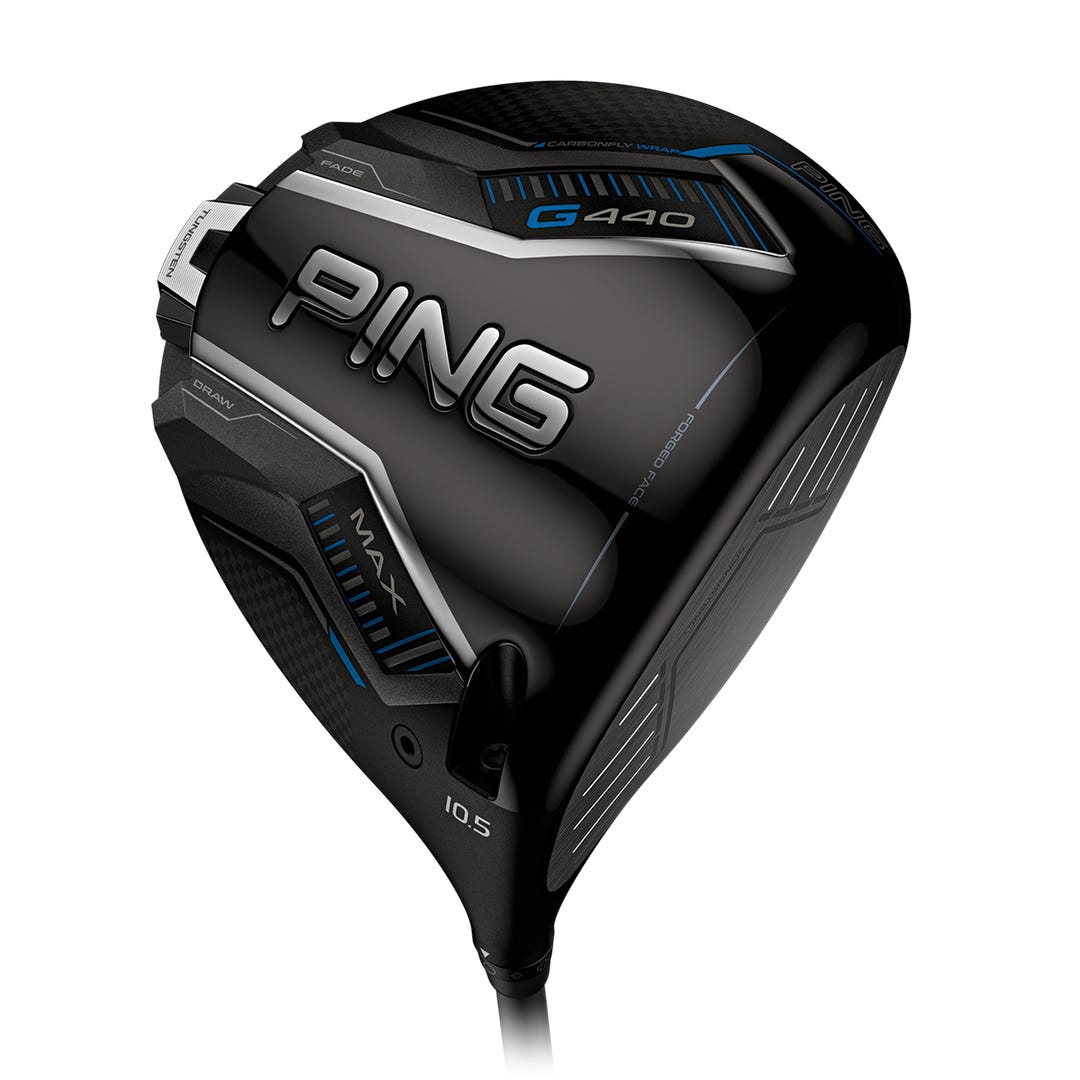
Many adjustable sleeves change more than loft. Increasing stated loft often closes the face relative to the original orientation, while reducing loft may open it. The exact relationship depends on the system. Recheck aim, lie and direction after every adjustment.
Useful starting points
TaylorMade’s published guidance treats higher loft as a useful starting point for slower speed and lists broad ranges rather than universal rules. A beginner around moderate speed can reasonably begin with 10.5° and compare 12°. A faster beginner with high launch or spin may need to compare 9° or 10.5°. These are test brackets, not prescriptions.
Adjustable head or fixed loft?
An adjustable head makes structured testing and later fine-tuning easier. Record the original position before changing it and use only the correct torque wrench. Do not assume a sleeve converts one head into every other loft without side effects; the address appearance and lie can change too.
When a lesson matters more than loft
If contact is scattered across the face or the ball starts far offline in both directions, loft selection may not be the limiting issue. A stable setup, centered strike and predictable face delivery can improve every loft. Equipment should support a repeatable motion rather than compensate for a different miss on each swing.
A repeatable way to test the choice
Begin with your current club as the baseline. Warm up normally, choose one ball model and hit to the same target. Alternate between the baseline and candidate in short blocks so fatigue or adaptation does not favor one option. Keep normal misses in the sample; deleting every poor strike creates a result that will not survive on the course.
Record carry distance, peak height, start direction, curvature, strike location and the total width of the shot pattern. Distance is useful only when the ball launches into a playable window and lands with enough control. Ten representative shots normally tell you more than one exceptional swing. If the result is close, repeat the comparison on another day or outdoors before ordering a custom specification.
Change one major variable at a time. A different head, shaft weight, flex, length and grip can all alter delivery. When everything changes together, you may know that one club performed better without learning why. Ask the fitter to write down the exact head, loft, lie, length, shaft model, shaft weight, flex, tipping and grip so the club you receive matches the club you tested.
Common mistakes to avoid
- Choosing from age, handicap or a shaft label alone.
- Comparing clubs with different lengths or lofts and crediting every change to one component.
- Using only the best shot instead of the complete dispersion pattern.
- Chasing low spin or maximum distance without checking carry and landing angle.
- Ordering a custom build before confirming return, alteration and warranty terms.
Decision checklist
- Write down the problem the change is supposed to solve.
- Establish baseline carry, height and dispersion.
- Confirm the exact specification rather than only the model name.
- Test with the same ball and a realistic target.
- Compare ordinary strikes and misses.
- Check gapping with the clubs immediately above and below it.
- Save the fitting sheet for future adjustments.
Frequently asked questions
Is 12 degrees too much loft for a beginner?
No. It can be an effective starting point for moderate speed or low launch. Verify spin and direction because delivered loft and strike matter more than the printed number alone.
Does more loft always reduce a slice?
More loft can reduce the relative effect of side spin, but it does not correct face-to-path delivery. Hosel changes may also alter face angle, so test the actual setting.
Should beginners use a 9-degree driver?
Only if the measured flight supports it. A player who launches high with excess spin may fit 9°, while many beginners lose carry with too little loft.
Can tee height change the fitting result?
Yes. Tee height influences strike location, launch and spin. Use a repeatable tee height during fitting and test the setup you can reproduce on the course.
Related buying guides
Compare our best drivers for beginners, golf club buying guide and fitting checklist.
Sources and review policy
Review TaylorMade’s official loft guidance and Titleist SureFit guidance for examples of adjustable fitting systems. Product specifications and fitting guidance were checked on August 17, 2026. We update this page when fitting guidance or linked product families change.

Leave a Reply