
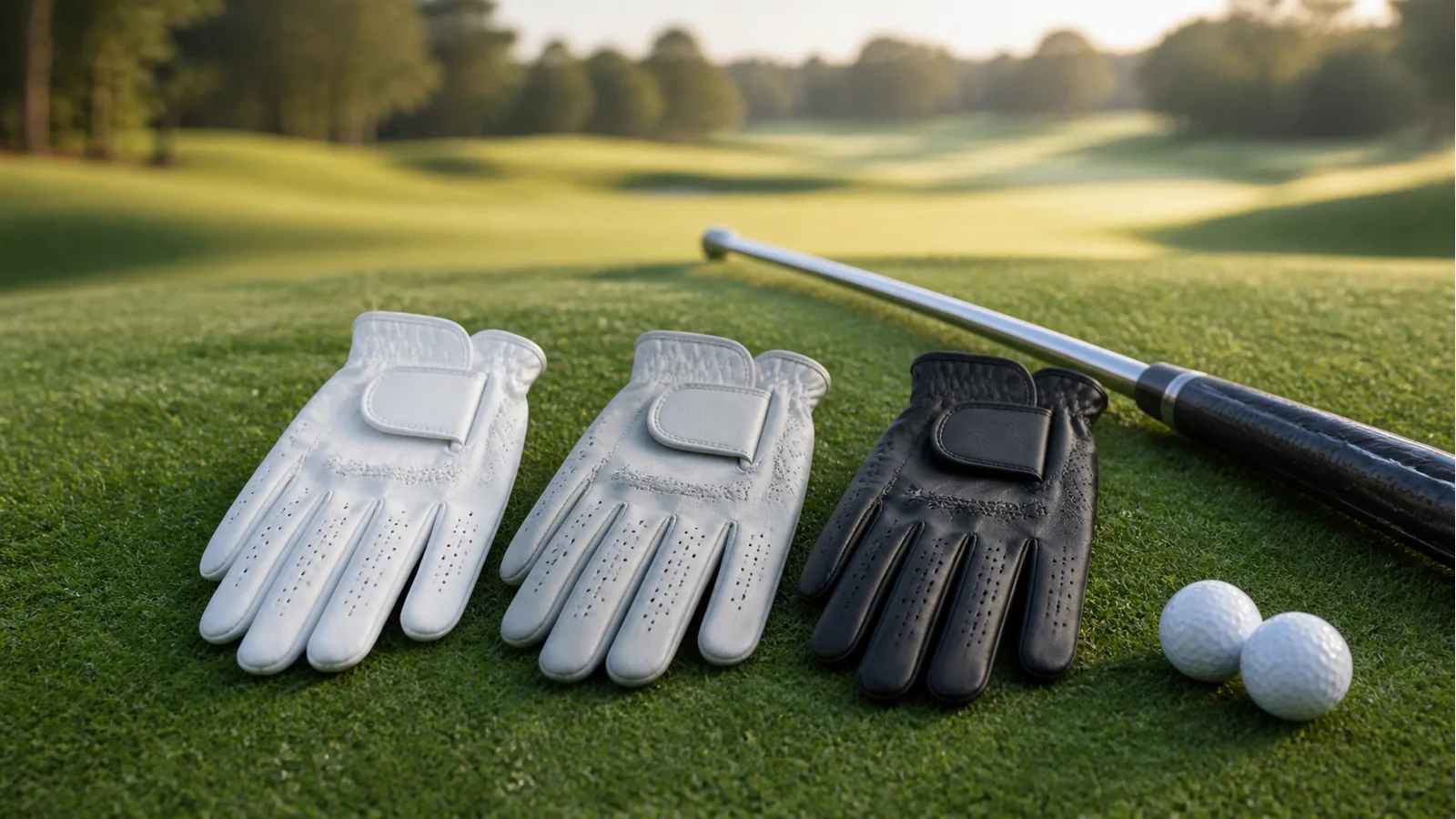
A golf glove should feel like a second skin: snug across the palm, secure at the wrist, and free of loose material at the fingertips. Most right-handed golfers wear a glove on the left hand; most left-handed golfers wear one on the right. Choose fit first, then select leather, synthetic, hybrid, rain, or thermal construction for the conditions you actually play.
This golf glove buying guide explains sizing, cadet fit, materials, weather performance, durability, care, and when replacement is worthwhile. Product links may earn us a commission at no extra cost to you; our selection criteria remain independent.
Golf glove quick-selection table
| Golfer or condition | Best starting point | Main trade-off |
|---|---|---|
| Beginner or value-focused golfer | Durable synthetic or hybrid glove | Usually less premium feel |
| Golfer prioritizing feel | Cabretta-leather palm or full-leather glove | Higher cost and greater moisture sensitivity |
| Hot, humid rounds | Ventilated hybrid; rotate two gloves | Frequent drying and cleaning |
| Steady rain | Purpose-built rain-glove pair | Designed to grip when wet, not for maximum dry feel |
| Cold conditions | Thermal winter-glove pair | Added bulk |
How a golf glove should fit
Fasten the closure with room remaining on the tab; if it reaches far beyond its intended position, try a smaller size. The material should lie flat across the palm without bunching. Fingertips should reach the ends without pressure against the seams. Make a fist and hold a club: the glove should not pull sharply across the knuckles or restrict movement.
Standard sizing suits proportionate palm and finger lengths. Cadet sizing generally suits a wider palm with shorter fingers. Do not assume your everyday glove size transfers directly—manufacturer charts differ, and leather can relax slightly with use.
Five-minute fitting checklist
- No loose fold in the palm.
- No empty space at the fingertips.
- Closure remains partly visible when secured.
- Seams do not rub while gripping a club.
- You can flex your wrist and fingers naturally.
Leather vs synthetic vs hybrid golf gloves
Leather
Cabretta leather is valued for softness, feedback, and close fit. It is a strong choice for golfers who prioritize feel, but sweat and rain can shorten its useful life. Let it air-dry naturally and avoid leaving it compressed in a golf-bag pocket.
Synthetic
Synthetic materials usually offer durability, stretch, and value. They are practical for practice sessions and beginners, although the palm may not feel as thin or responsive as premium leather.
Hybrid
Hybrid designs combine a leather contact area with synthetic panels for stretch and ventilation. They balance feel and durability and are a sensible default when you are unsure which material to choose.
Choose for heat, rain, and cold
In heat, moisture management matters more than a marketing label. Rotate two gloves, remove the glove between shots, and dry both flat after the round. In sustained rain, a matched rain-glove pair is normally more reliable than trying to preserve a dry-weather leather glove. In cold weather, thermal pairs can maintain comfort and grip but should still allow you to feel grip pressure.
Which hand wears the golf glove?
The glove normally goes on the lead hand—the hand placed higher on the grip. A right-handed swing therefore normally uses a left-hand glove, while a left-handed swing normally uses a right-hand glove. Some golfers wear two for rain, cold, skin protection, or personal comfort; there is no requirement to use only one.
When should you replace a golf glove?
Replace it when the palm becomes polished and slippery, a hole develops, seams loosen, the closure no longer holds, or the glove has stretched enough to bunch. Premature wear in one small area may reveal excessive grip pressure or a grip-end position that needs attention. Rotating gloves and storing them flat can extend service life.
Common buying mistakes
- Buying loose for comfort, then losing grip stability when material bunches.
- Choosing only by brand instead of using the current size chart.
- Using a premium leather glove in heavy rain instead of a rain-specific pair.
- Leaving a damp glove inside a zipped pocket.
- Replacing gloves repeatedly without checking worn or incorrectly sized club grips.
Who each glove type is for
Beginners: start with a durable synthetic or hybrid model and learn what snug fit feels like. Frequent players: consider rotating two or three gloves and select construction by weather. Feel-focused players: compare leather thickness and seam comfort. Golfers with hand discomfort: prioritize fit and consult an appropriate professional rather than relying on extra padding as a medical solution.
Frequently asked questions
Should a golf glove be tight?
It should be snug, not painful. There should be no loose palm material or empty fingertips, and full finger movement should remain comfortable.
Can a beginner use a leather glove?
Yes. Leather is not restricted by skill level. A hybrid or synthetic glove may simply offer better value while a beginner learns sizing and care preferences.
Can I wash a golf glove?
Follow the manufacturer label. Many synthetic gloves tolerate gentle cleaning better than leather. Avoid high heat; reshape and air-dry the glove.
How many gloves should I carry?
Two dry-weather gloves are useful for rotation. Add rain gloves or thermal gloves when the forecast and season justify them.
Next steps
Once fit and material are settled, coordinate the rest of your setup with our golf clubs for seniors guide, golf-ball guide, and club-fitting checklist.
Grip condition changes how a glove feels
A glove cannot compensate for grips that are polished, undersized, oversized, or contaminated with sunscreen and dirt. If you must squeeze harder to stop the club moving, clean the grips according to their manufacturer’s instructions and inspect their condition. Grip diameter also affects how your fingers sit around the handle, so evaluate glove fit with the clubs you actually use rather than with an unrelated display club.
How to compare value instead of sticker price
Price per glove is only one measure. Track how many comfortable rounds a glove delivers, whether its fit remains stable, and whether you can buy the same size consistently. A lower-priced glove replaced every few rounds may cost more than a suitable durable model. Conversely, an expensive leather glove is poor value if your climate, perspiration, or storage habits destroy it quickly.
For a useful comparison, rotate two models over similar conditions and record fit, palm wear, seam comfort, moisture behavior, and rounds played. This is more dependable than judging softness for a few seconds in a shop.
Care and storage routine
- Remove the glove between shots when practical in hot weather.
- After the round, smooth it back into shape rather than leaving it balled up.
- Air-dry away from radiators, dryers, or direct high heat.
- Store dry gloves flat in their sleeve or a ventilated organizer.
- Keep a separate older glove for range practice if it still provides safe grip.
Never continue using a torn glove where the material interferes with the grip. The goal is consistent contact and comfort—not extracting one more round from damaged equipment.

Leave a Reply