
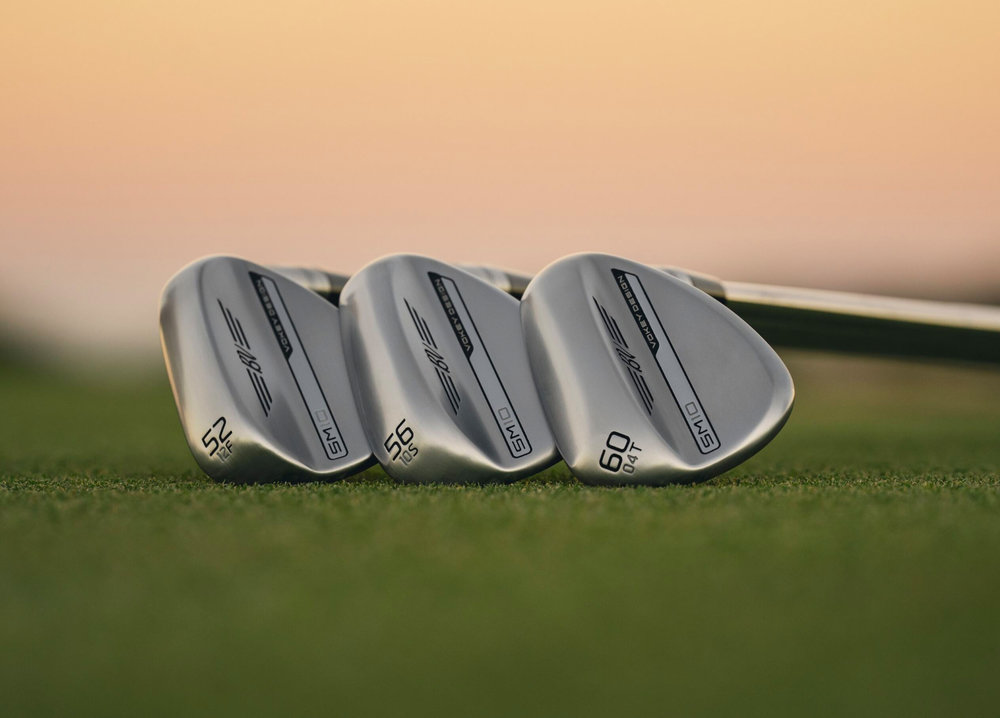
Wedge grind describes how material is shaped and removed from a wedge sole. It changes how the club enters and exits turf or sand, especially when the face is opened. Grind matters, but it should be chosen after loft and bounce—not instead of them. For most golfers, the useful goal is a sole that moves through their normal conditions without digging, bouncing into the ball, or forcing a specialty technique.
Wedge grind, bounce, and sole width are different
These terms are related, which is why product descriptions can be confusing. Loft primarily controls launch and distance. Bounce angle describes the relationship between the leading edge, the lowest point of the sole, and the ground. Sole width affects how much surface can resist digging. Grind is the three-dimensional shaping of that sole.
Two wedges can display the same measured bounce and behave differently. One may have a wide, cambered sole that offers substantial support through soft ground. Another may have a narrow sole with heel and trailing-edge relief that sits closer to the turf when opened. That is why the number stamped on the club is a starting point rather than a complete fitting.
Quick wedge-grind selection table
| Player or condition | Useful starting shape | Main benefit | Trade-off |
|---|---|---|---|
| Steep attack; deep divots | Fuller sole, moderate-to-high effective bounce | Resists digging | Can feel bulky on very firm lies |
| Neutral delivery; mixed conditions | Mid-width versatile sole | Works for square and slightly open faces | Not optimized for one extreme |
| Shallow attack; firm turf | Narrower sole or trailing-edge relief | Leading edge can sit lower | Less protection in soft ground |
| Frequent open-face shots | Heel and toe relief | Reduces leading-edge rise when opened | Requires predictable strike and setup |
| Soft bunkers and lush turf | Wide/full sole | Adds flotation | Less adaptable from tight lies |
Common types of sole relief
Heel relief
Heel relief removes material from the rear heel portion of the sole. When a golfer opens the face, an unrelieved heel can lift the leading edge. Relief lets the head rotate open while keeping the leading edge closer to the surface. This is useful for cut shots, bunker shots, and short-sided pitches, but it does not automatically make the wedge forgiving on a square-face full swing.
Toe relief
Toe relief removes material toward the toe side. It can help the sole move cleanly when the handle is lowered or the face is manipulated. Golfers should not select it simply because it looks versatile: if those setups are not part of the player’s normal short-game pattern, the benefit may never appear.
Trailing-edge relief
Trailing-edge relief reduces the back portion of the sole. The wedge may sit lower and feel quicker through firm ground, particularly when the shaft is neutral or slightly lowered. The trade-off is reduced effective sole area. A golfer who delivers the club steeply may expose the leading edge and dig more easily.
Full sole
A full sole keeps more material from heel to toe. It is often a dependable choice for square-face shots, softer turf, and players who need the club to resist digging. Full does not mean crude: camber and sole width still change how quickly the head enters and exits the surface.
Match the grind to your delivery
Start with normal shots rather than a tour player’s highlight reel. Observe divots with a mid or high-loft wedge. A deep divot that begins before or immediately after the ball suggests a steeper delivery and a greater need for sole support. A shallow bruise or almost no divot suggests the player may use less effective bounce, especially on firm turf.
Technique can change the answer. Moving the handle forward reduces delivered loft and can reduce effective bounce. Opening the face usually adds delivered bounce, but heel relief can moderate how high the leading edge sits. Ball position, shaft lean, and face angle therefore matter as much as a static swing label.
For a fuller explanation of the basic angle, read our wedge bounce guide. Use grind as the next layer after identifying a sensible bounce range.
Match the grind to turf and sand
Firm turf and compact sand generally reward a sole that can enter a tight lie without the leading edge sitting too high. Moderate bounce, a narrower sole, or targeted relief can help. That does not mean choosing the lowest-bounce option automatically; a slightly wider sole with camber can remain playable without becoming a digging tool.
Soft turf and fluffy sand need more resistance to sinking. A wider or fuller sole and more effective bounce increase flotation. The golfer can still open the face, but a highly relieved sole may remove some of the support that soft conditions demand.
Variable courses favor the middle. A versatile mid-width sole on the most-used wedge is often more valuable than an extreme grind. Specialty relief can be reserved for the highest-loft wedge if the golfer regularly plays open-face shots.
Choose by the role of each wedge
A wedge set does not need matching grinds. The gap wedge is commonly used for full and three-quarter swings, so stability with a square face matters. The sand wedge may need enough width and bounce for bunker play while remaining reliable for pitches. The lob wedge can carry more relief if it is used for open-face shots—provided the golfer has enough practice and suitable conditions.
- Gap wedge: prioritize predictable turf contact and distance control.
- Sand wedge: balance bunker flotation with pitch-shot versatility.
- Lob wedge: consider extra relief only when the shot pattern requires it.
If you are building the set from scratch, our sand wedge buying guide explains loft, bounce, bunker fit, and gapping together. Mid-handicap players can also use the practical shortlist in our wedge guide for mid-handicappers.
Who benefits from a specialized grind?
Specialized relief makes the most sense for a golfer with repeatable contact, a clear short-game technique, and known course conditions. It can also help a player who uses one high-loft wedge for several face angles and handle positions. The benefit is functional freedom—not a guarantee of more spin.
Beginners and golfers with inconsistent contact usually benefit from a more neutral sole. A grind that demands precise delivery can turn small setup changes into large differences in turf interaction. Forgiveness in a wedge often comes from allowing a reasonable margin for where the sole meets the ground.
A practical fitting test
- Bring your current wedge. It creates a baseline for strike, divot, launch, and confidence.
- Test from real turf when possible. Mats hide digging and can make low-bounce soles look easier.
- Hit square-face shots first. Test full, three-quarter, and basic pitch shots before manipulating the face.
- Move to problem lies. Try a tight lie, rough, soft turf, compact sand, and fluffy sand if available.
- Change one variable at a time. Compare grinds with similar loft, shaft, and head family.
- Record the miss. Note heavy contact, thin contact, excessive digging, or the sole bouncing into the ball.
A launch monitor can show carry and launch, but it cannot fully describe how a sole feels through turf. The best decision combines ball-flight data with visible strike and ground interaction.
Buying mistakes to avoid
- Choosing a grind from a professional player’s setup without matching technique or conditions.
- Treating the stamped bounce number as the wedge’s complete behavior.
- Testing only from a mat or one perfect lie.
- Using an extreme low-bounce sole to cure thin shots caused by setup.
- Buying three identical grinds when the wedges perform different jobs.
- Ignoring gapping, shaft feel, and preferred face angle while focusing on sole letters.
Frequently asked questions
Is wedge grind more important than bounce?
No. They work together. Bounce provides a useful starting range; grind determines how that bounce and sole area are presented during different face and handle positions.
What is the most forgiving wedge grind?
There is no universal grind, but a fuller mid-to-wide sole with adequate effective bounce generally gives more protection against digging. The correct amount depends on delivery and ground conditions.
Do I need the same grind on every wedge?
No. A gap wedge used for fuller swings may suit a stable full sole, while a lob wedge used open-faced may benefit from heel or trailing-edge relief.
Can a wedge fitting be done indoors?
Indoor testing can compare launch, carry, feel, and strike location. A final grind decision is stronger when it includes real turf and sand because mats cannot reproduce digging and flotation accurately.
Does more sole relief create more spin?
Not directly. Spin depends on contact quality, loft, speed, ball, groove condition, and the lie. Relief can help a golfer present the face cleanly, but it is not a spin feature by itself.
Bottom line
Choose wedge grind by combining delivery, conditions, and the job of each club. Start with a sensible loft and bounce, then use sole width and relief to refine turf interaction. A neutral grind that works on ordinary shots is a better foundation than a highly specialized sole that only succeeds from one lie.
Affiliate disclosure: Golf Buying Guide may earn a commission from qualifying purchases made through links on this site, at no additional cost to you. Recommendations are based on fit, intended use, and trade-offs rather than commission.

Leave a Reply