
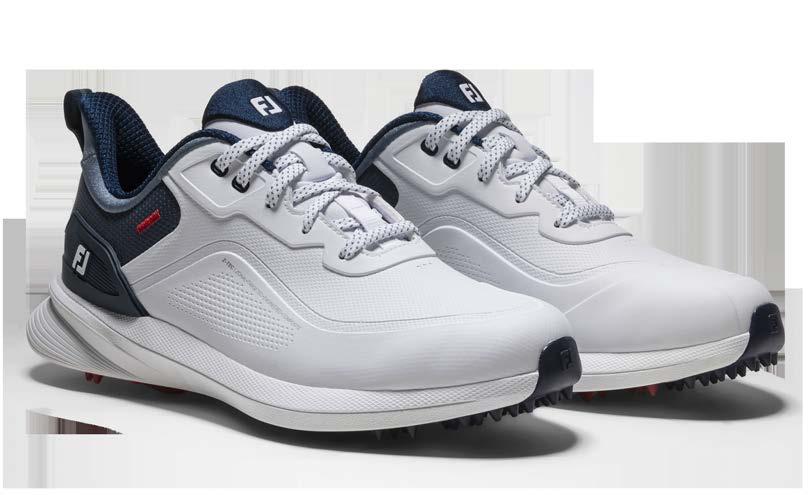
Golf shoes for stability should hold your heel and midfoot, give you a broad base and grip the turf you play. Test for movement inside the shoe before comparing spikes. Strong tread helps the outsole hold the ground. It does little if your foot slides sideways inside the upper.
Separate fit, support and traction

Fit keeps your foot in place. A heel that lifts or a midfoot that moves can make a shoe feel unstable on firm ground. Try the same size in another width or compare a model built on a different shape. The wide golf shoe fit guide explains why length and width solve different problems.
Support comes from the shape and stiffness of the platform and how the upper wraps your foot. Look for a base that feels steady as you put weight toward the outside edge. A soft cushion can feel good while walking and feel less steady when you shift laterally. A firmer shoe can work if it bends where your foot bends.
Traction depends on the outsole and the ground. Cleats can help on soft slopes, while a spikeless pattern may provide plenty of grip on dry turf. Mud, wear and the way you move affect both. Start with the surface you play most often.
A quick stability check in the store
Walk and stop
Wear your usual golf socks. Walk a short loop, turn and stop. If you find a ramp, walk down and check whether your toes meet the front. Repeat with the second shoe. Check for heel lift when you go uphill and for pressure under the arch when you stop.
Shift your weight gently
Stand on a flat surface with enough room and shift a little weight from one foot to the other. Compare how much each foot moves inside the upper. Try a second lacing tension. If you have to pull the laces very tight to feel secure, compare another size, width or shoe shape.
If the store has a hitting bay and allows shoe trials, make a few easy swings. A pair that feels steady on a mat still needs a reasonable outsole for the course. Try the foot movement check on both sides so you can tell whether the shoe or the surface changes the feeling.
Look at the tread and the course together
Consider a specific place you’ve slipped. A wet slope calls for a different comparison from a dry cart path or a firm tee. Check whether the outsole has useful tread where you load the shoe. If you often play in mud, look at how easily the pattern clears when you clean it.
The best golf shoes for walking compares waterproof spikeless and spiked options. If you’re building a bag around walking rounds, the golf push cart guide covers one way to move the bag without carrying its weight all day.
Choose for the round you actually walk
If you frequently play on firm, dry ground, start with a secure spikeless shoe and compare it with a cleated pair. If the course is wet most mornings and you spend time on slopes, include a spiked shoe early in the test. Fit comes first in either case.
If you already own a shoe that worked when it was new, inspect the outsole before replacing it. Rounded lugs, worn cleats or a loose upper can change the way the shoe feels. For a cleated pair, check the manufacturer’s replacement instructions and the exact system used on your model.
FAQ
Do spiked golf shoes provide more stability?
They can give you more grip on soft or wet turf. Your foot still needs to stay in place inside the shoe. Compare both factors from the lies you play most often.
Can a wide golf shoe make me feel more stable?
It can if your toes and forefoot need room and the heel still fits. If the extra width lets the whole foot slide sideways, try a different shape or width.
Is a stiffer golf shoe better for stability?
A firmer base can feel more predictable when you shift weight. You still need enough flex for walking and enough space to avoid pressure. Try two pairs under the same conditions.
What causes my heel to slip in a golf shoe?
Common fit issues include excess length, a heel shape that doesn’t match your foot or loose lacing. Walk uphill in the pair and compare it with another model before assuming a tighter lace will fix it.
Leave a Reply