
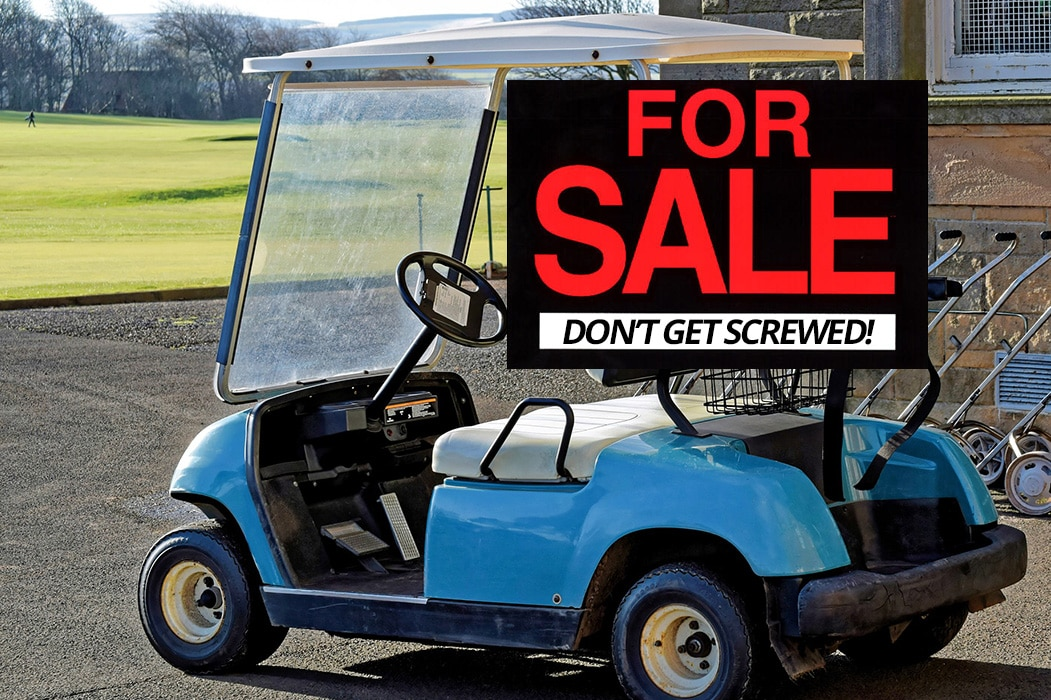

Buying a used golf cart is the process of purchasing a pre-owned golf cart that has been previously used by someone else. Golf carts are commonly used for transportation on golf courses, but they can also be used in a variety of other settings, such as for personal use, on farms or ranches, or for commercial purposes. When buying a used golf cart, it’s important to carefully inspect the vehicle and consider factors such as the age of the cart, the condition of the batteries, the tires, the brakes, and any features or accessories that come with the cart. It’s also important to test drive the cart to make sure it’s comfortable and functioning properly. In addition to buying used golf carts, you can check out the best golf carts we’ve ranked for you.
Buying a used golf cart can be a cost-effective way to acquire a useful vehicle, but it’s important to do your research and be aware of any potential issues that may come with a pre-owned cart. If you are not experienced in assessing golf carts, you may want to bring someone with you who has expertise in this area or have a mechanic inspect the cart before you purchase it. Overall, buying a used golf cart can be a great way to save money and get a vehicle that will serve your needs, but it’s important to do your due diligence and make sure you’re getting a quality vehicle that will last for years to come. Buying a best-used golf cart can be a great way to save money on this useful vehicle. Here are some important things to look for when considering a used golf cart:
- Battery Condition: One of the most important things to check when buying a used golf cart is the condition of the batteries. Golf carts typically use deep-cycle batteries, and these can be expensive to replace. Make sure the batteries are holding a charge and that they have enough life left to last for a while.
- Age of the Golf Cart: The age of the golf cart is also an important consideration. Age alone does not determine condition. Compare hours or usage, storage, service history and component condition; a maintained older cart can be a better purchase than a neglected newer one.
- Tires: Check the condition of the golf cart tires, as these can also be expensive to replace. Look for signs of wear or damage, and make sure the tires have good tread.
- Brakes: The brakes on a golf cart are important for safety, so make sure they are in good working order. Test them out to make sure they are working properly.
- Rust and Corrosion: Golf carts can be prone to rust and corrosion, especially if they have been used in wet conditions. Check for signs of rust or corrosion on the body and frame, and make sure there are no holes or weak spots.
- Check for Leaks: Look for any signs of leaks from the motor, battery, or other components of the golf cart. This could be a sign of a problem that will need to be fixed.
- Features and Accessories: Check the golf cart for any features or accessories that you need or want, such as a windshield, lights, or a rear seat. Make sure these are in good condition and working properly.
- Test Drive: Finally, take the golf cart for a test drive to make sure it handles well and is comfortable to drive. This will give you a chance to make sure everything is working properly and that the golf cart is right for your needs.
By keeping these factors in mind when buying a used golf cart, you can ensure that you get a reliable and functional vehicle that will last for years to come.
A practical used golf cart inspection
Inspect the cart in daylight and begin before the seller charges or warms it. Fresh charging can temporarily hide weak batteries, while a recently washed chassis can conceal leaks. Ask for the serial number, model year, charger, keys, maintenance records and proof that the seller owns the vehicle.
Electric cart battery checks
Battery replacement can be one of the largest near-term costs. Confirm battery type, manufacture date and whether all units are the same age and specification. Look for swollen cases, corrosion, damaged cables and low electrolyte on serviceable flooded batteries. During a test drive, include a hill and repeated acceleration; a charge indicator that falls rapidly deserves investigation. Lithium conversions should have a compatible charger, secure mounting and a documented battery-management system.
Gas cart checks
Start the engine cold. Excess smoke, fuel smell, difficult starting, knocking or unstable idle can signal deferred maintenance. Inspect the oil level, air filter, belts, fuel lines and the area beneath the cart for seepage. Ask when the oil, spark plug and drive belt were last serviced.
Steering, suspension, brakes and frame
- Check tire wear across the full tread; uneven wear can indicate alignment or suspension issues.
- Turn the wheel gently with the cart stopped and note excessive free play.
- Drive over a modest uneven surface and listen for clunks or rattles.
- Test service and parking brakes on level ground, then on a safe incline.
- Inspect the frame, battery tray and welds for rust, cracks or collision repairs.
Questions that protect your budget
Ask why the cart is being sold, how it was stored, whether it was used near salt water and which modifications were installed. Lift kits, rear seats, lights and speed controllers can be useful, but poorly installed wiring or an overloaded suspension can create expense. Verify that the charger is included and actually completes a charge cycle.
Legal and transport considerations
Rules for neighborhood or street use differ by state and municipality. Before paying, check local requirements for speed, lights, mirrors, seat belts, registration and insurance. Also measure your trailer or transport vehicle and confirm the cart’s weight, width and tie-down points.
Final buying decision
Price the cart as the purchase amount plus immediate repairs, batteries, transport and required safety equipment. Put the agreed model, serial number, accessories and condition in a bill of sale. If the seller will not allow a cold start, test drive, serial-number check or independent inspection, walk away. For a broader comparison of vehicle types and ownership costs, see our golf cart buying guide.

Leave a Reply