
Disclosure: Golf Buying Guide may earn a commission from qualifying purchases made through retailer links, at no extra cost to you. Product availability, specifications and prices can change.
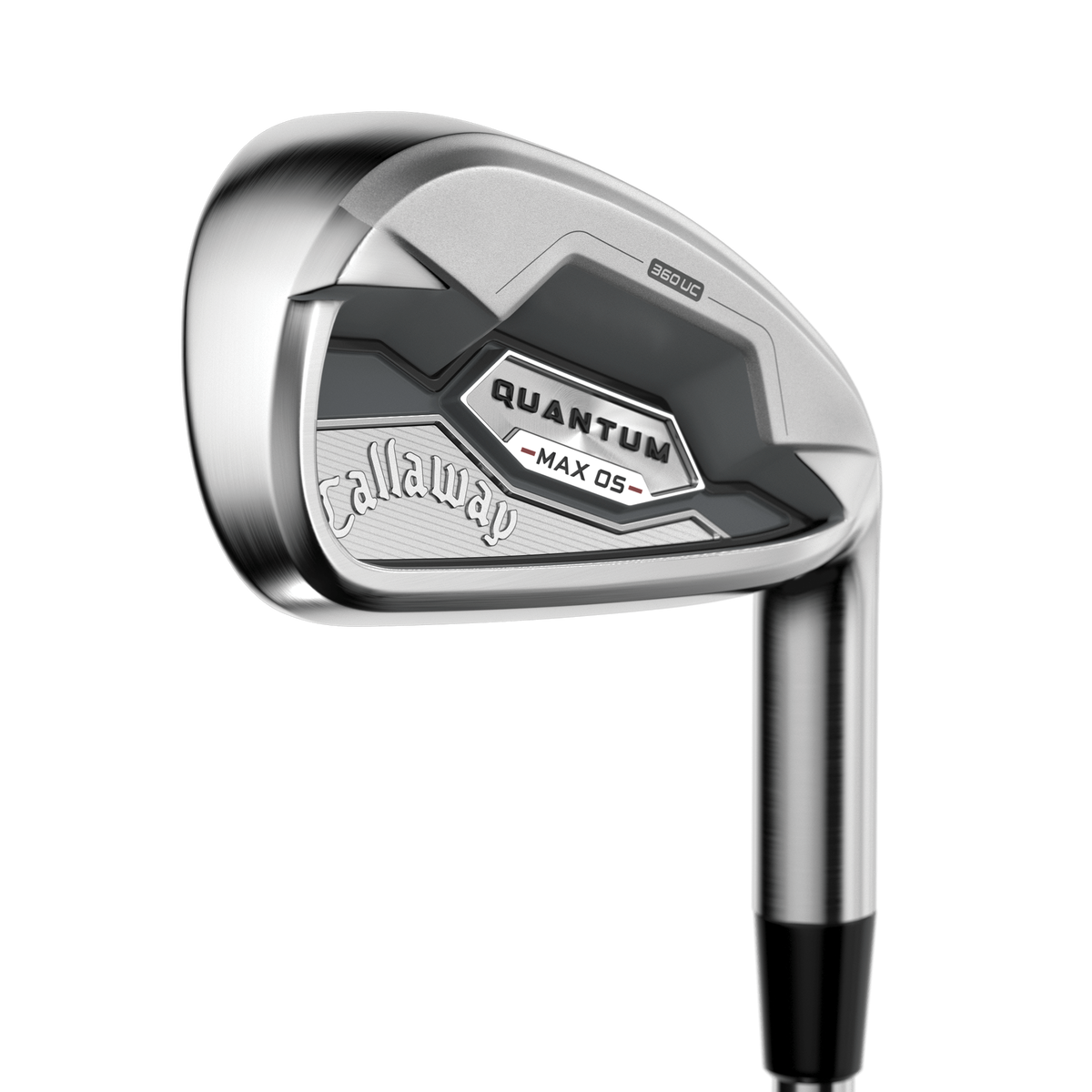
Featured image source: Official product image: Callaway Quantum Max OS.
High-handicap golfers usually benefit from irons that protect ball speed across a larger face, launch predictably and provide enough sole width to manage imperfect turf contact. Forgiveness cannot remove a major path or face error, but the right head and shaft can make ordinary misses more playable and distance gaps easier to trust.
Quick picks
| Option | Best use | Best for | Action |
|---|---|---|---|
| Callaway Quantum Max OS Irons | Best oversized option | Golfers who want a large, confidence-inspiring profile and launch help. | View options |
| TaylorMade Qi Max HL Irons | Best for added height | Players whose iron shots fly too low to hold greens. | View options |
| PING G440 Irons | Best fit-first option | Golfers who value a broad fitting matrix and conventional cavity-back shape. | View options |
| Cleveland Halo XL Full-Face Irons | Best hybrid-style iron | Players who prefer maximum help and a wide, hybrid-like sole. | View options |
How we selected these options
The shortlist emphasizes head stability, launch assistance, practical set composition and fitting availability. We avoided declaring a universal winner because sole interaction, visual preference and delivery conditions can reverse an indoor comparison.
We prioritized fit and predictable outcomes over a single marketing number. A club or ball that helps one golfer can create the wrong launch, spin, curvature or feel for another. Use this shortlist to narrow the field, then confirm the specification, handedness, shaft, set makeup, return policy and warranty before paying.
Best oversized option
Callaway Quantum Max OS Irons

Who it’s for: Golfers who want a large, confidence-inspiring profile and launch help.
The 2026 Max OS model is the oversized Quantum iron, designed for easier launch, speed and distance.
Pros
- Large profile
- High-launch intent
- Hybrid combo option available
Cons
- Oversized look is not subtle
- Loft and wedge gaps require planning
What to verify: Compare standard irons with the OS combo configuration.
Best for added height
TaylorMade Qi Max HL Irons

Who it’s for: Players whose iron shots fly too low to hold greens.
Qi Max HL pairs a game-improvement chassis with a higher-launch configuration.
Pros
- Specific HL model
- Forgiving family design
- Modern fitting options
Cons
- May launch excessively for some deliveries
- Premium current model
What to verify: Measure descent angle and wind performance, not height alone.
Best fit-first option
PING G440 Irons

Who it’s for: Golfers who value a broad fitting matrix and conventional cavity-back shape.
PING’s G-series remains a game-improvement fitting reference with multiple lie, shaft and set options.
Pros
- Extensive fitting choices
- Multiple set configurations
- Established game-improvement profile
Cons
- Custom fitting adds time
- Not the largest hybrid-style shape
What to verify: Confirm color code, length, shaft and grip on the order.
Best hybrid-style iron
Cleveland Halo XL Full-Face Irons

Who it’s for: Players who prefer maximum help and a wide, hybrid-like sole.
The Halo family uses a distinctive hybrid-iron construction intended to simplify launch and turf interaction.
Pros
- Hybrid-like long-club confidence
- Wide sole
- Full-face groove concept
Cons
- Unconventional appearance
- May not suit shallow, firm-turf interaction
What to verify: Test from the turf conditions you normally play.
How to choose the right option
Test a mid-iron and one of the longest irons you intend to carry. A 7-iron can look excellent while the 5-iron never reaches a useful height. Compare carry, peak height, descent angle and left-to-right dispersion, then check whether a hybrid fills the top gap better.
Do not compare model numbers without loft charts. Stronger loft can produce a longer 7-iron while leaving awkward wedge gaps. Map the full set from the longest iron through the first specialty wedge and budget for any missing gap club.
Who should use this guide?
This guide fits newer golfers, inconsistent ball-strikers and improving players who value predictable carry more than compact shaping. Golfers who consistently control strike and trajectory may prefer a smaller players-distance or forged cavity model.
Common buying mistakes
- Buying from one perfect simulator shot instead of comparing typical dispersion.
- Choosing a model before confirming length, loft, lie, shaft, grip and set composition.
- Assuming “forgiving” means every golfer will launch or curve it the same way.
- Ignoring delivery, adjustment, return and warranty terms.
- Replacing equipment when a lesson, gapping check or setup change would solve the problem.
Frequently asked questions
How should I compare a new option with my current equipment?
Establish a baseline first. Use the same ball, target and warm-up, then alternate between your current equipment and the candidate instead of hitting one long block with each. Keep ordinary misses in the sample. Record carry, start direction, curvature, strike location and the width of the complete pattern. For putters and balls, add pace control and short-game results. For a service or used-equipment decision, compare the written specification and total cost in the same structured way. Stop when fatigue changes the swing and repeat the test later if the result is close.
What costs should I include beyond the advertised price?
Include fitting fees, upgraded shafts or grips, missing clubs, adjustment work, shipping, tax and likely replacement items. A cheaper option is not good value if it needs immediate rebuilding, while a new premium model is difficult to justify when a properly fitted prior generation produces the same practical outcome. Ask for an itemized specification and save the receipt, serial information and fitting sheet. Confirm who handles warranty work and whether a custom order can be changed or returned.
What should I do after buying?
Photograph the original setup, keep adjustment tools and test the equipment over several normal rounds. Track patterns rather than memorable shots. Clean and inspect it regularly, and avoid making multiple setup changes at once. If performance is poor, verify loft, lie, length, settings and gapping before replacing the item again.
What handicap needs game-improvement irons?
Handicap is only a clue. Strike pattern, speed, launch and preferred shape matter more.
Are stronger lofts bad for high handicappers?
Not automatically, but they must create usable height and sensible wedge gaps.
Should high handicappers carry a 4-iron?
Only if it launches and carries predictably. A hybrid may be more useful.
Do wide soles prevent fat shots?
They can reduce digging for some deliveries, but they cannot correct ground contact that occurs far behind the ball.
How many irons should a beginner buy?
Buy the clubs that create distinct gaps. A shorter iron set plus hybrids can be more practical than a traditional 4-PW set.
Related guides
Read the club-category pillar, the senior club guide and our Cobra iron timeline.
Sources and update policy
Product facts were checked against the linked manufacturer pages on August 11, 2026. Manufacturer photography is used editorially to identify the equipment and is stored locally to avoid hotlinking. We recheck models, specifications and retailer availability during scheduled content reviews.
Final decision worksheet
Before ordering, write down the problem you want the purchase to solve, your current baseline, the specification tested and the return conditions. Rank the candidates for typical performance, confidence, fit, total cost and after-sale support. Reject any option that wins only because of one exceptional shot or an unverified seller claim. If two choices remain close, select the simpler build or the one with better local service rather than paying for a feature you cannot measure.
Recheck handedness, loft, length, shaft or construction, grip, color, quantity and included accessories on the final cart page. Save a copy of the listing and order confirmation because online descriptions can change. This short worksheet makes the decision reproducible and gives a fitter or retailer useful information if the delivered product does not match the order.
Leave a Reply