
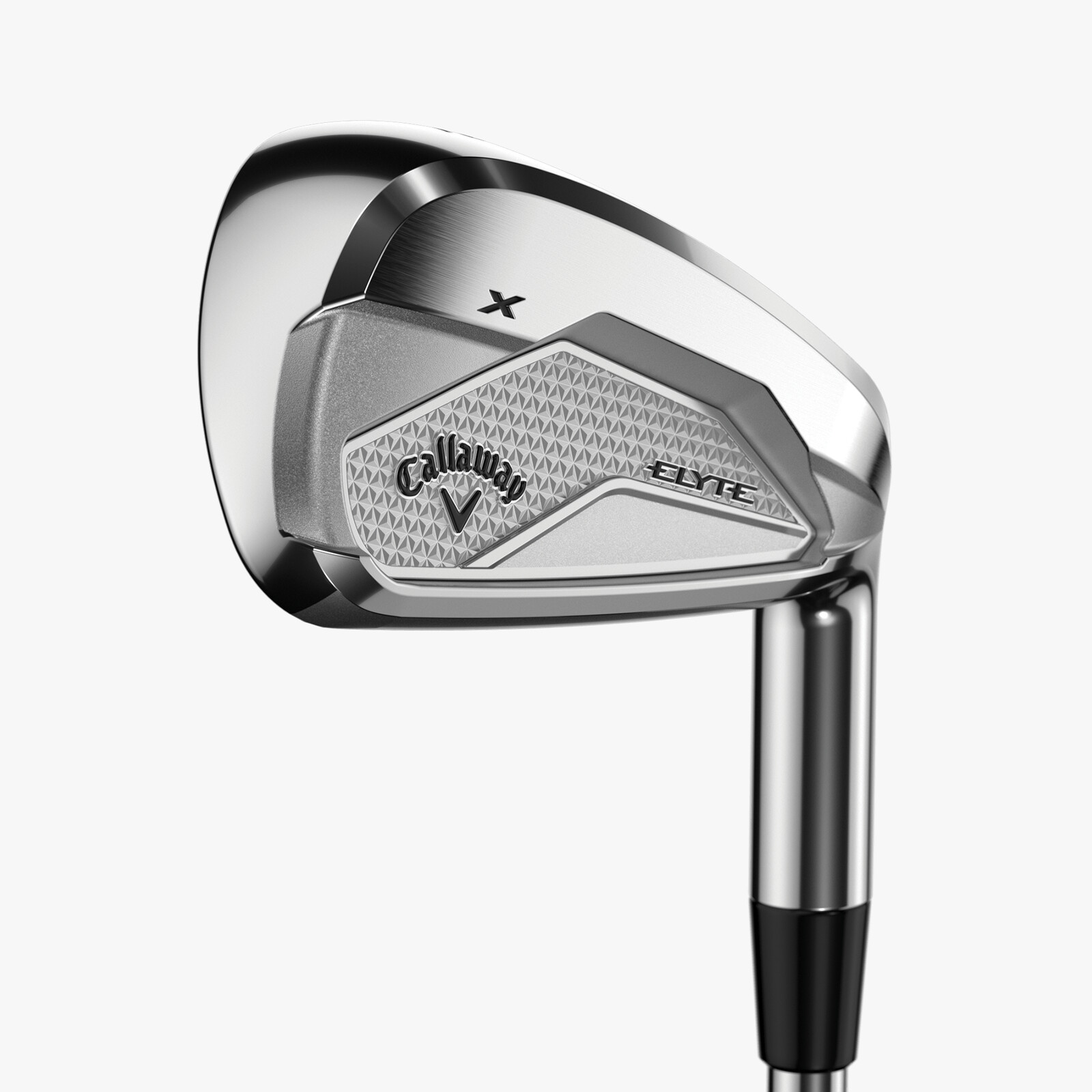
The loft on golf irons tells you the face angle in the maker’s spec. It can help you compare heads and find a likely gap, but two clubs marked 7-iron can have different lofts and carry distances. Check your exact model first. Then measure the shots you actually hit before changing clubs.
Golf iron loft chart: three real sets

| Club | Callaway Elyte X (2025) | PING G440 standard | Srixon ZXi5 (2025) |
|---|---|---|---|
| 4-iron | 18° | 19° | 22° |
| 5-iron | 21° | 22° | 24° |
| 6-iron | 24° | 25.5° | 27° |
| 7-iron | 28° | 29° | 31° |
| 8-iron | 32° | 33° | 35° |
| 9-iron | 36° | 37° | 39° |
| Pitching wedge | 41° | 42° | 44° |
| Next set wedge | 46° AW | 47° UW | 50° AW |
These examples use published stock lofts. They show why a generic chart can’t tell you the loft of your club. Custom orders, bent used clubs and alternate loft packages can differ. If you can’t identify the model or build, a shop can check the loft.
Find the gap by carry

Use one ball and record the typical carry for each club. Keep ordinary misses in the sample. Compare adjacent clubs and look for places where the distances overlap or jump. If you can’t measure carry, use the first bounce relative to a visible target.
Start at the longest end. If your 5- and 6-iron carry about the same distance and the 5 flies lower, try a hybrid. At the short end, compare the PW with the first wedge. The pitching wedge loft guide explains how to pick the next wedge by carry.
Read loft with the rest of the build

A stronger loft is a smaller angle. It can produce more distance in a comparable build, but the face, shaft, head and your delivery affect launch and stopping power. Bring your current iron if you demo a replacement. Compare the carry you gain with the height you can use.
Read the Elyte X irons review for a strong-loft example and the mid-handicap irons roundup for other setups. If you like one head but have a poor gap, ask the fitter what can safely be adjusted for that model before altering it.
What a carry gap looks like in practice
Suppose your 6-iron typically carries 150 yards and your 5-iron carries 152. Those example numbers leave little reason to choose the longer iron on a shot over trouble. Compare the 5-iron with a hybrid and record where each ball first lands. Then check the next club up so the fix doesn’t create a new overlap.
At the short end, a 41° PW and a 54° sand wedge may leave a distance that’s hard to cover with either full swing. Compare a club in between and test a comfortable partial swing with the PW. Keep the option that covers the yardage more often, especially from a lie you see on the course.
Make a chart you can use on the tee
Write down loft, typical carry and the short end of your usual pattern for each club. Separate good contact from outliers such as a heavy strike or a ball sitting up in rough. Measure on the same day if you can, then confirm a few numbers outdoors where you can see the landing.
FAQ
What is the loft on a 7-iron?
The three stock examples here range from 28° to 31°. Check the maker’s chart for your exact set and ask about custom options if you bought it used.
Why do two irons with the same loft fly different distances?
Length, face design, shaft, ball and delivery can change the strike and flight. Compare both with the same ball and a target you can measure.
Should I bend my irons to create even loft gaps?
Measure carry first. If you have a gap you need to solve, ask a fitter whether the head can be adjusted and how that might change bounce and turf contact.
What if my longest irons fly the same distance?
Compare the longest iron with a hybrid or a higher-loft fairway wood. Look for a useful carry gap and enough height to land where you need it to.

Leave a Reply