
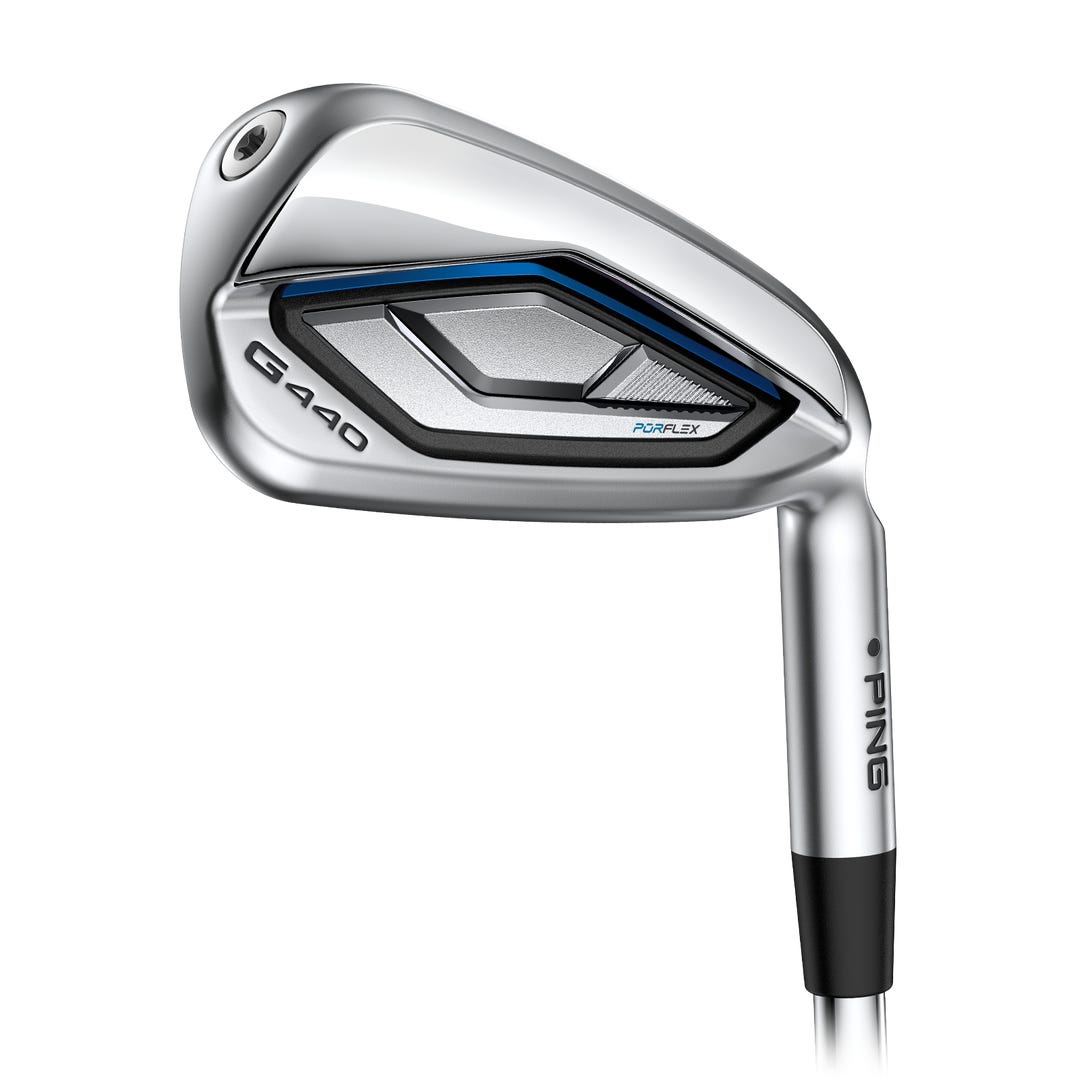
Cavity back golf irons have a recessed area behind the clubface. The shape gives designers room to spread mass around the head and tune how it behaves on off-center strikes. Try a larger cavity back if your usual misses lose carry. Try a compact one if you want a smaller look and already strike the ball fairly consistently.
The words cavity back describe a head design. They cover several kinds of irons, from compact heads built for skilled players to larger sets that put more weight around the perimeter.
What the cavity changes

Look at the back of a traditional muscle-back iron and you’ll usually see a solid section of metal behind the lower face. On a cavity back, some of that material can sit closer to the heel, toe or sole. The maker can use the resulting mass distribution to change how the head resists twisting or where its center of gravity sits.
When the ball strikes the toe, the head can turn. A design with more resistance to twisting may help retain useful ball speed and direction. The amount of help depends on the whole head, including its face and where the weight sits. It can’t be read from the size of the recess alone.
Cavity back, blade and hollow iron
| Design | What to look for | Who might try it first |
|---|---|---|
| Larger cavity back | Wider platform and more visible perimeter structure | A golfer whose strike moves around the face |
| Compact cavity back | Shorter-looking profile and a smaller recess | A player who wants a compact look and some perimeter weighting |
| Muscle-back blade | Solid back with a muscle section behind the face | A consistent striker who values that shape and feel |
| Hollow iron | Enclosed head with internal space or filler | A golfer who wants a clean look and a head built for ball speed |
A hollow iron may look like a blade from behind. A cavity may be partly covered by a badge. Use the product specifications to check construction if you’re shopping by pictures. The game-improvement versus players irons guide explains the buying categories in more detail.
What to test before buying cavity back irons
Start with your 7-iron and one candidate. Pick a target and compare typical carry, strike location and where each shot lands. Keep the common misses in the sample. If your current toe strike drops short and the new iron leaves a usable next shot, that’s a result you can judge on the course.
Then hit the longest iron you’re considering. A wide sole or a different head profile can feel better with a 7-iron and still leave the long irons hard to launch. On grass, compare a few shots from a tight lie and a slightly scruffy one. Pay attention to where the sole contacts the ground.
At the short end, check the PW and the next club in your bag. Our pitching wedge loft and gapping guide explains how to compare carry. If you want specific heads to test, see the best mid handicap irons. The senior irons roundup has options for players comparing lighter builds.
When a smaller cavity makes sense
Try a compact head if you like seeing less club behind the ball and your usual strike gives you enough carry. It may also suit you if a larger sole feels awkward on tight ground. Compare the result with your own club before deciding. Fit and sole shape can matter more than the category name.
A mixed set is another option. You might prefer more help in the 5- and 6-iron and a compact shape from the 7-iron down. Hit both clubs at the transition to make sure the carry gap works. Check the actual shaft and loft specs instead of assuming adjacent club numbers fit together.
FAQ
What are cavity back golf irons?
They’re irons with a recessed area behind the clubface. The design lets the maker put weight around the head to tune stability, launch and feel.
Are cavity back irons good for beginners?
A larger cavity back is a sensible first trial for a new golfer who needs help on off-center strikes. Choose the shaft and length you can deliver comfortably, then check the longest iron before buying a set.
Is a cavity back the same as a game-improvement iron?
The terms overlap. Some cavity backs are large game-improvement irons. Others have compact shapes and are aimed at skilled players.
Can I mix cavity back and hollow irons?
Yes. Compare the two clubs where the designs meet and measure the carry gap. A good mixed set fills the next distance without creating an unexpected overlap.
Leave a Reply